Employee Wellbeing – Getting Support from Senior Leaders

Some people charged with improving employee wellbeing are fortunate to work for companies where at least one senior leader is really on-board with the idea. They see the benefit of such action and ensure adequate resources are available to implement a wellbeing strategy that provides real impact. Of course, there are many others who are less fortunate and who have to fight for this kind of senior level support. So, if this is you, what can be done?
It’s tempting to create a fact-filled presentation outlining costs and potential savings, in fact this may have be requested, but in most cases it will only engage these leaders on an intellectual level; meaning, at best, they will think it’s a good idea but they won’t get passionate about it.
When trying to engage people’s hearts it’s usually best to give them some form of experience. Why is this important? Well, to quote Confucius, I hear and I forget; I see and I remember; I do and I understand. It’s this understanding that is important as understanding leads to belief and if senior leaders believe in the wellbeing programme then it’s far more likely to be successful.
An example of this idea in action was when, as part of a wellbeing focused conference for several hundred managers and leaders, Resilient People were asked to deliver a number of services in particular a 1 hour ‘highlights’ resilience training session. This session introduced delegates to the content of resilience training and allowed them to undertake a few interactive exercises. The session went down a storm and the CEO declared the training was a must and would be rolled out through their organisation. For the small team who had pulled the day together this was a massive victory. The one hour session probably achieved something no amount of business presentations or reports ever could. It got the senior leaders excited about their wellbeing strategy.
It doesn’t have to cost a lot of money to create these types of experience. Consider what your organisation already does in terms of wellbeing. Could this be adapted in some way, if needed, to create an event either specifically aimed at the leaders or something that would encourage them to take part. Do any of them have wellbeing interests already, such as cycling? If so, they are quite likely to get behind a cycling event to increase participation in the cycle to work scheme etc.
There are no hard and fast rules here. It’s about getting creative and disrupting the norm. Generally the more creative you are this stage the more hearts and minds you will engage and in-turn the stronger your wellbeing programme will become. Remember to make it relevant to your organisation and start with areas where there is already a decent amount of interest such as cycling or nutrition. And be passionate about your program as this is what will ultimately encourage others to get on board.
Thanks for reading

29.09.2026
Looking After the People Who Keep Britain Moving
14.09.2026
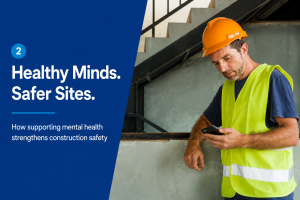
Building Safer Sites Starts with Supporting People

03.07.2026
Looking After Those Who Look After Our Communities: Supporting the Mental Health of Housing Professionals