Blog: Why Sleep is so Important

Sleep. A natural activity that every human has done since birth. Yet why is it that we can find this valuable commodity is something that we are missing out on?

On average, people need 8 hours sleep at night to be fully rested and ready for the day. For some its 6 hours, for others it’s 10 hours; whatever is your optimum amount, it is likely that your sleep has been disturbed or affected at some point, especially if you are feeling busy or stressed. But it is essential that sleep is near the top of your to do list!

Essential for your Mind

Sleep allows your brain to organise the myriad of different events of the day as well as rest and rejuvenate ready for another busy day. But lack of sleep also has further-reaching consequences: not getting enough sleep can cause concentration problems, drowsiness and forgetfulness, not to mention irritability. When we are tired, we are less efficient, less able to cope with change and demands, and more likely to cut corners. As well as feeling groggy and grumpy, we may find that less sleep also makes us less able to commit things to both our long and short term memory and it will affect our creativity too!

Essential for your Appearance

You’ll have heard of the term ‘Beauty Sleep’ – there’s a reason it is given that name! Lack of sleep will leave its evidence in your appearance, causing you to look tired and drawn. Sleep deprivation causes your body to increase the production of steroids, which in turn decreases the production of collagen, which causes skin to thin and wrinkle. All those fancy creams and lotions won’t be able to help if you are consistently burning the midnight oil and depriving your body of much needed rest in order to rejuvenate mentally and physically.

Essential for your Health

Sleep is as important as food and exercise when it comes to your health and wellbeing. Sleep restriction can be the cause of weight gain and obesity. Lack of sleep will mean that your body will crave foods to give it energy and if this is coupled with a less than nutritious diet and perhaps a lack of exercise too, this can leave you sluggish and carrying the extra pounds. But it isn’t just diet that can be affected by reduced rest hours. Links have also been found to more serious conditions such as strokes, heart conditions, high blood pressure and depression. Making sure you get the right sleep will improve your immune function and hopefully help you to avoid illness in the long run.

Rest and Rejuvenation

So what can you do to combat these worrying symptoms of sleep loss? See below for some handy hints and tips for you to beat the eye bags:

1. Try to hit that average sleep amount of 8 hours.
For most people, this will be enough to keep you in tip top form, both mentally and physically, but you can be flexible with this if your body needs more or less. You should be waking up feeling refreshed.

2. Try to keep a regular sleep schedule – even on weekends!
A regular sleep pattern is essential to encourage healthy sleeping habits and to make sure your body is consistency and regularly getting what it needs. As lovely as lie ins are on a weekend, your body will be much heathier if it has consistency and routine.

3. Bedtime routines
It sounds like this is for children, doesn’t it? But having a familiar routine will mean your body knows that it is time to start winding down ready for rest. This might be a nice warm bath before bed, a few pages of a book or your favourite TV programme before you settle down for the night. Try to avoid using a tablet, phone or laptop right before bed time. The blue light emitted from screens has been proven to stimulate the brain and that’s the last thing you want before you settle down to sleep!

4. Brain dump!
You’ll know it well: you’ve just clicked off the light, you snuggle down and your breathing starts to slow…but suddenly, your brain starts to work through the different events of the day, the things you need to do tomorrow, the to-do list that you need to work through when you get into the office… Before these thoughts can be given chance to keep you awake, jot them down on a notebook by the bed so that you can relax properly and address them when you wake up in the morning.

5. Be sensible about sleep
Often, we can be our own worst enemies in terms of giving ourselves a break, but sleeping isn’t cheating! Learn to say no and have an early night if events are catching up with you. If you are working into the evening, be your own conscientious friend and be sensible about what is achievable and when it is time to call it a night. After all, your short term success and long term health depends on it!
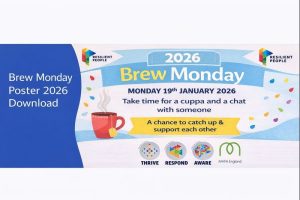
Poster Resource: Brew Monday 2026

16.01.2026

Poster Resource: Brew Monday 2026
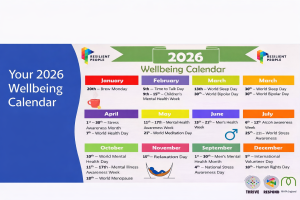
2026 Workplace Wellbeing Calendar: Using Awareness Days to Build Healthier, More Supportive Teams

13.01.2026

2026 Workplace Wellbeing Calendar: Using Awareness Days to Build Healthier, More Supportive Teams

Boosting Winter Mindset at Work: Practical Tools for Colder Days

05.12.2025

Boosting Winter Mindset at Work: Practical Tools for Colder Days

Building Employee Resilience: Supporting You to Support Your Teams

This workshop is designed for managers, supervisors and team leaders to support them in understanding their own stress and coping mechanisms before looking at ways to recognise signs of mental ill health in their teams, respond with appropriate and useful strategies to support them and to resolve issues through well-being and resilience strategies.

As well as exploring some individual trigger points of stress and resilience, the sessions include role plays and scenarios to explore how to communicate and respond to mental ill health effectively.

All of our sessions are tailored to the needs of each organisation that we work with to make sure that it is the perfect fit for every business, and we facilitate useful, informative discussions to make sure managers, line managers and supervisors are prepared, confident and effective when supporting others with their mental health.

Poster Resource: Brew Monday 2026

16.01.2026

Poster Resource: Brew Monday 2026

2026 Workplace Wellbeing Calendar: Using Awareness Days to Build Healthier, More Supportive Teams

13.01.2026

2026 Workplace Wellbeing Calendar: Using Awareness Days to Build Healthier, More Supportive Teams

Boosting Winter Mindset at Work: Practical Tools for Colder Days

05.12.2025

Boosting Winter Mindset at Work: Practical Tools for Colder Days

Health and Wellbeing @ Work 2018

Some of our team exhibited at the recent Health and Wellbeing @ Work 2018 conference on 6th-7th March.

Over the two busy days, we had the opportunity to chat and connect with a range of people and discuss some of our Resilience services, all supporting organisations to recognise signs of mental ill health, respond with appropriate and suitable strategies, and resolve issues with a range of resilience and wellbeing services.

Poster Resource: Brew Monday 2026

16.01.2026

Poster Resource: Brew Monday 2026

2026 Workplace Wellbeing Calendar: Using Awareness Days to Build Healthier, More Supportive Teams

13.01.2026

2026 Workplace Wellbeing Calendar: Using Awareness Days to Build Healthier, More Supportive Teams

Boosting Winter Mindset at Work: Practical Tools for Colder Days

05.12.2025

Boosting Winter Mindset at Work: Practical Tools for Colder Days

Mental Health First Aid and Its Benefits: IOSH Regional Branch Meeting

On Thursday 15th March, Director Barrie Penrose delivered a speech on Mental Health First Aid at the IOSH Regional Branch meeting on Mental Health at York Race Course.

As an accredited MHFA trainer, the professional health and safety membership organisation invited Barrie to share information about Mental Health First Aid training. Accredited by Mental Health First Aid England, the training and support materials provide a step by step approach to help organisations to create a healthy environment introduce awareness-raising initiatives, identify the first signs of mental ill health and support staff who are experiencing an issue.

Poster Resource: Brew Monday 2026

16.01.2026

Poster Resource: Brew Monday 2026

2026 Workplace Wellbeing Calendar: Using Awareness Days to Build Healthier, More Supportive Teams

13.01.2026

2026 Workplace Wellbeing Calendar: Using Awareness Days to Build Healthier, More Supportive Teams

Boosting Winter Mindset at Work: Practical Tools for Colder Days

05.12.2025

Boosting Winter Mindset at Work: Practical Tools for Colder Days

#BeatBlueMonday Survival Tips

1. Use positive language

Being positive has a lot to do with the language that you use. If the language you use is mainly negative, this can have an adverse impact on you and those around you.

2. Count your blessings

Giving thanks makes people happier and more resilient, it strengthens relationships, it improves health, and it reduces stress. Gratitude shifts your focus from what your life lacks to the abundance that is already present.

3. Look for little ways to help others

When we’re kind to people we know it strengthens our connections with them and provides a source of support . Research shows that being kind to others increases our own levels of happiness as well as theirs. What goes around comes around.

4. Surround yourself with positive people

You are only as good as the company you keep. If you are around gloomy people there is a chance your smile might fade too. Surround yourself with supportive friends with positive outlooks.

5. Smile and laugh

A test to show you how smiling keeps you positive is to smile, and then try to think of something negative, but keep trying to smile. People are attracted to other people who smile. We’re compelled to spend more time around someone who smiles and to share in the feel-good chemicals their smile induces in us. Smiles are contagious, which means you can increase the happiness of others around you.

Poster Resource: Brew Monday 2026

16.01.2026

Poster Resource: Brew Monday 2026

2026 Workplace Wellbeing Calendar: Using Awareness Days to Build Healthier, More Supportive Teams

13.01.2026

2026 Workplace Wellbeing Calendar: Using Awareness Days to Build Healthier, More Supportive Teams

Boosting Winter Mindset at Work: Practical Tools for Colder Days

05.12.2025

Boosting Winter Mindset at Work: Practical Tools for Colder Days

Stress Awareness – What’s all the fuss?

nsad-logo

It’s National Stress Awareness Day! But why is stress awareness so important? There is still a lot of misunderstanding about the effects of excessive pressure and what is and what is not ‘real stress.’ And in many organisations a macho culture still prevails, where working under extreme, prolonged pressure can be seen as a rite of passage. Personally I have worked in a number of such environments and I never saw the problem with it at the time. That was until I learned I had a damaged liver and became quite ill.

There has been lots of anecdotal evidence about the links between our physical and mental wellbeing but now research is catching up. In 2015 The University of Edinburgh published results of a 10 year study looking to connect psychological wellbeing and liver failure. The research involved 165,000 participants who were surveyed for mental distress. They were each tracked over 10 years and those who died had there reason for death recorded and categorised. The research found that those who had scored highly for signs of stress and depression were far more likely to suffer fatal liver disease. This pointed to a clear link between the psychological conditions of stress and depression and the physical health of the hepatic system.

To look at this another way; would many sensible people endure a job that required them to drink excessive amounts of alcohol every day, knowing the long-term damage they were likely causing to their body? It’s hard to imagine they would …

Perhaps one day we will view the exposure to excessive pressure in the same light as binge drinking? Perhaps one day we’ll understand the real damage being caused to our bodies in return for a few extra silver coins?

Until then we can at least continue to improve awareness and education in this area, making the workplace a safer environment for both body and mind.

National Stress Awareness Day is a great place to start or revitalise the efforts in your organisation. We have certainly got lots going on at Resilient People and are always happy to share our insights. Just give me a call if you think we might be able to help.

Barrie

Poster Resource: Brew Monday 2026

16.01.2026

Poster Resource: Brew Monday 2026

2026 Workplace Wellbeing Calendar: Using Awareness Days to Build Healthier, More Supportive Teams

13.01.2026

2026 Workplace Wellbeing Calendar: Using Awareness Days to Build Healthier, More Supportive Teams

Boosting Winter Mindset at Work: Practical Tools for Colder Days

05.12.2025

Boosting Winter Mindset at Work: Practical Tools for Colder Days

Employee Wellbeing – Getting Support from Senior Leaders

Some people charged with improving employee wellbeing are fortunate to work for companies where at least one senior leader is really on-board with the idea. They see the benefit of such action and ensure adequate resources are available to implement a wellbeing strategy that provides real impact. Of course, there are many others who are less fortunate and who have to fight for this kind of senior level support. So, if this is you, what can be done?

It’s tempting to create a fact-filled presentation outlining costs and potential savings, in fact this may have be requested, but in most cases it will only engage these leaders on an intellectual level; meaning, at best, they will think it’s a good idea but they won’t get passionate about it.

When trying to engage people’s hearts it’s usually best to give them some form of experience. Why is this important? Well, to quote Confucius, I hear and I forget; I see and I remember; I do and I understand. It’s this understanding that is important as understanding leads to belief and if senior leaders believe in the wellbeing programme then it’s far more likely to be successful.

An example of this idea in action was when, as part of a wellbeing focused conference for several hundred managers and leaders, Resilient People were asked to deliver a number of services in particular a 1 hour ‘highlights’ resilience training session. This session introduced delegates to the content of resilience training and allowed them to undertake a few interactive exercises. The session went down a storm and the CEO declared the training was a must and would be rolled out through their organisation. For the small team who had pulled the day together this was a massive victory. The one hour session probably achieved something no amount of business presentations or reports ever could. It got the senior leaders excited about their wellbeing strategy.

It doesn’t have to cost a lot of money to create these types of experience. Consider what your organisation already does in terms of wellbeing. Could this be adapted in some way, if needed, to create an event either specifically aimed at the leaders or something that would encourage them to take part. Do any of them have wellbeing interests already, such as cycling? If so, they are quite likely to get behind a cycling event to increase participation in the cycle to work scheme etc.

There are no hard and fast rules here. It’s about getting creative and disrupting the norm. Generally the more creative you are this stage the more hearts and minds you will engage and in-turn the stronger your wellbeing programme will become. Remember to make it relevant to your organisation and start with areas where there is already a decent amount of interest such as cycling or nutrition. And be passionate about your program as this is what will ultimately encourage others to get on board.

Thanks for reading

Poster Resource: Brew Monday 2026

16.01.2026

Poster Resource: Brew Monday 2026

2026 Workplace Wellbeing Calendar: Using Awareness Days to Build Healthier, More Supportive Teams

13.01.2026

2026 Workplace Wellbeing Calendar: Using Awareness Days to Build Healthier, More Supportive Teams

Boosting Winter Mindset at Work: Practical Tools for Colder Days

05.12.2025

Boosting Winter Mindset at Work: Practical Tools for Colder Days

Wellbeing – What’s the Return on Investment?

When talking to people about wellbeing strategies this is a question that comes up from time to time. It’s still common for those charged with researching or implementing a wellbeing strategy to believe that return on investment should be the core driver. It’s also the belief that causes so many wellbeing and training programmes to struggle or fail completely.

If a strategy is designed with the primary focus of reducing costs then staff will likely see this and assume negative motives lie behind the wellbeing movement. In these circumstances the well intentioned, hard work can backfire and reduce staff engagement levels. After all, nobody wants to feel like the ‘lucky’ turkey receiving extra portions of food in the run up to Christmas!

So what makes a better focus for a wellbeing strategy other than return on investment? Well an organisation or company could start by looking at their own values and mission. These tend to be positive and forward looking such as: ‘providing customers with uniquely creative solutions to their biggest problems’. For a company with such a mission would it not be better to build a wellbeing strategy which in one part helps employees to be more creative in problem solving? Surely helping the company to achieve its primary mission is a far more preferable approach than simply reducing the annual sickness level by a few days.

And don’t forget, as staff members become more engaged with wellbeing for positive reasons there will be natural improvement in both absenteeism and presenteeism levels anyway.

A great example of aligning wellbeing and company mission is Apple. Steve Jobs was a long time believer in mindfulness and openly attributed his creative success to a daily practice. It helped him to reduce stress, gain clarity and be his most creative self. Considering Apple’s mission at the time: to create tools for the mind that advanced humankind, do you think Steve Jobs introduced mindfulness and yoga sessions for all his employees to simply save a few dollars? Or rather to provide the best possible environment for developing creative minds to ensure the company’s success?

So, get to grips with your company or organisation’s mission and look how a wellbeing strategy can support it. Knowing this will make things a lot easier the next time a senior decision maker asks about the return on investment. Take the opportunity to outline how a healthier, more engaged workforce can help achieve the success that is the company or organisation’s purpose for existence.

Promoting the positive mission behind a wellbeing strategy and focusing on ‘value on investment’ is far easier and less risky than presenting a ‘fancily-wrapped’ cost cutting exercise.

Good luck and keep it fun …

Poster Resource: Brew Monday 2026

16.01.2026

Poster Resource: Brew Monday 2026

2026 Workplace Wellbeing Calendar: Using Awareness Days to Build Healthier, More Supportive Teams

13.01.2026

2026 Workplace Wellbeing Calendar: Using Awareness Days to Build Healthier, More Supportive Teams

Boosting Winter Mindset at Work: Practical Tools for Colder Days

05.12.2025

Boosting Winter Mindset at Work: Practical Tools for Colder Days

Don’t let stress ruin your relationship

Here is a scenario common in many relationships; both partners work in stressful jobs and then come home to the pressure of being a parent and running a home. This situation can often lead to arguments, intolerable frustration and, finally, splitting up. So what are the main pitfalls to avoid if you want to keep your relationship healthy?

Well, it was reported in the Telegraph this week that a study conducted by the Florida State University College of Business concluded, after interviewing 400 working couples, that the main thing to avoid is competing with each other about who had the worst day. This makes sense. It’s something we have all done at some time, become frustrated by the self-pity of another and retorted by explaining how bad things can really get … outlining a day in your life!

Of course, most of us would struggle to remember a time when this ever ended happily. Instead it just leads to more arguments, more frustration and more chance of splitting up. If you have children, it’s also very upsetting for them, not to mention unfair.

It is important to offer support to each other, to know when the other has had a particularly bad day and forgo your own need for a bit of sympathy. In fact, you will more than likely get a lot more support back when you need it the most if you’re prepared to give it to others. If you are going to survive the rigours of work life then you must have a place where you look forward to going, a place where you will get support when you most need it, and a place where you can enjoy your time away from work. This place should be your home.

The study also concluded that couples with the highest levels of support at home were more satisfied with their marriage, were more likely to say that they have a good relationship with their colleagues and concentrated better at work. They were also less likely to say they were tired after work, feel guilty about neglecting their family and were less critical of their spouse and children.

Poster Resource: Brew Monday 2026

16.01.2026

Poster Resource: Brew Monday 2026

2026 Workplace Wellbeing Calendar: Using Awareness Days to Build Healthier, More Supportive Teams

13.01.2026

2026 Workplace Wellbeing Calendar: Using Awareness Days to Build Healthier, More Supportive Teams

Boosting Winter Mindset at Work: Practical Tools for Colder Days

05.12.2025

Boosting Winter Mindset at Work: Practical Tools for Colder Days

Working too many hours can cause depression

A warning to all workaholics: Working too many hours overtime might greatly increase the chances of you suffering from depression. It has been reported in a number of newspapers this week that a study examining the work habits of more than 2000 UK Civil Servants discovered a credible link between hours worked and the likelihood of suffering from a major bout of depression. In fact, the study stated that working more than 11 hours a day led to a 2.5 times increase in the chance of suffering from severe depression when compared to those working a standard seven or eight hour shift.

It goes without saying the relationship between work and depression is complicated and even the mentioned study does not go so far as to suggest the link is concrete. There is enough evidence, however, to cause most of us to heed the warning. Like riding a motorcycle at high speeds will increase your chances of having an accident, pushing yourself too hard at work will increase the chances of becoming depressed . You need to have regard for you emotional wellbeing; you need to be honest with yourself and others about the way you feel, and you need to know when to slow things down before you make yourself ill.

Of course, for many of us working long hours is an everyday fact and it is important to remember that there are lots of things you can do reduce your stress levels and improve your mental wellbeing.

Poster Resource: Brew Monday 2026

16.01.2026

Poster Resource: Brew Monday 2026

2026 Workplace Wellbeing Calendar: Using Awareness Days to Build Healthier, More Supportive Teams

13.01.2026

2026 Workplace Wellbeing Calendar: Using Awareness Days to Build Healthier, More Supportive Teams

Boosting Winter Mindset at Work: Practical Tools for Colder Days

05.12.2025

Boosting Winter Mindset at Work: Practical Tools for Colder Days