Needles, but no drugs …

In a society where a large number of men struggle with mental illness in silence because they find it hard to express how they are feeling, it’s always nice to see new forms of help. The traditionally considered non-masculine past-time of knitting is gaining popularity with men thanks to celebrity backing from the likes of Russell Crowe, David Arquette and Ryan Gosling.

NHS studies has found that a couple of hours spent knitting woolly items can help reduce stress, fight depression, improve mental illness recovery, boost self-esteem, aid recovery from addiction and help you to be more mindful. It’s no wonder men-only knitting classes are starting to crop up as more and more men are picking up a pair of needles.

I wonder if any organisations have considered this? Some type of workplace knitting challenge could be made fun, open to everyone and would be cheap to set up. It could even be designed to support a charitable cause!

Just a thought …

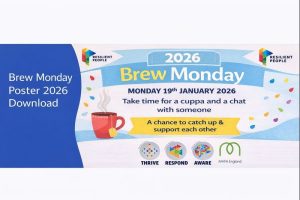
Poster Resource: Brew Monday 2026

16.01.2026

Poster Resource: Brew Monday 2026

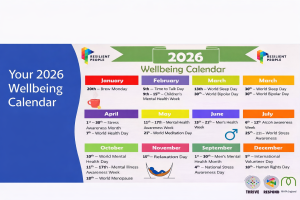
2026 Workplace Wellbeing Calendar: Using Awareness Days to Build Healthier, More Supportive Teams

13.01.2026

2026 Workplace Wellbeing Calendar: Using Awareness Days to Build Healthier, More Supportive Teams

Boosting Winter Mindset at Work: Practical Tools for Colder Days

05.12.2025

Boosting Winter Mindset at Work: Practical Tools for Colder Days

I never went to a female suicide

As we approach mental health week I couldn’t help reflecting on why I became involved in the business of personal wellness. See, I’ve always been interested in physical health and maintained a steady effort over the years to keep a good level of fitness. For many years however, I ignored my mental health believing I wasn’t one of the ‘weak ones’ who had to worry about such things. I was eventually proved wrong, of course.

Through my own experiences of dealing with mental health and, in particular, supporting and managing officers through extreme trauma I became more aware of the often silent and besieging effects of mental health problems, particularly on men.

I highlight the cause of men because so much of this problem is hidden. Men often feel unable to reach out for help and often allow things to build up, becoming victims of their own masculinity. To illustrate my point: in my police career I attended a number of tragic suicides; I know of at least four officers who took their own lives and so did a member of my own family. Here’s the thing, they were all men – I never actually attended a female suicide. Of course females do take their own lives, and when they do it is every bit as tragic. My own experience however simply highlights how much this is a bigger problem for men.

Here are some startling statistics:

  • In 2013 8 out of 10 suicides in the UK were men
  • Suicide is the biggest cause of death in men under the age of 45
  • In the last decade there has been a marked increase in male suicides
  • As many as 4 in 10 men have contemplated suicide at some time or other

There are often complex issues leading to the act of suicide but one of the simplest and most effective steps a person or organisation can take to help reduce this problem is to promote awareness. Through increasing awareness we can help reduce the stigma surrounding men’s mental health and make it easier for men to share their problems and receive appropriate support.

Remember all men are at risk of mental illness. Many men never show any obvious signs other than appearing a little down or distant. And those who appear the strongest are often most at risk as they seem to go through life with the weight of the world on their shoulders!

If you would like to know more about Mental Health Awareness week from the 16th to 22nd May you’ll find some interesting resources here

Barrie Penrose

Poster Resource: Brew Monday 2026

16.01.2026

Poster Resource: Brew Monday 2026

2026 Workplace Wellbeing Calendar: Using Awareness Days to Build Healthier, More Supportive Teams

13.01.2026

2026 Workplace Wellbeing Calendar: Using Awareness Days to Build Healthier, More Supportive Teams

Boosting Winter Mindset at Work: Practical Tools for Colder Days

05.12.2025

Boosting Winter Mindset at Work: Practical Tools for Colder Days

Mindfullness for UK Police?

I was recently sent a photograph showing a group of Canadian police officers meditating and it really got me thinking. As a former police sergeant who now has a regular mindfulness practice could I ever see this happening in the UK? The more I thought about it the more it seemed like a great idea!

People tend to assume that police officers are trained to be emotionally resilient in the situations they face. In reality they are not. How do you train somebody to be okay with a messy murder scene or a multiple death road collision? They are still human beings under the uniform and some of them never properly recover from their worst experiences. I’ve ridden the high and lows many times and I’ve helped many others through some of their worst times. It’s where my interest in building personal resilience stemmed from and why I trained in so many systems including NLP, coaching, CBT and of course, mindfulness.

In my experience mindfulness trumps the others as it feels more proactive to me. Since starting a mindfulness practice I’ve noticed I don’t get dragged down as far, or for as long when things do go wrong in my life.

But what would police officers think of mindfulness? Well I decided to find out by contacting my old team and asking them whether they would have participated in an optional short mediation at the end of their daily briefing. I was expecting quite a lot of abuse in return and was surprised when they all said they would have at least given it a go. So if you’re reading this looking for a business case you could say that my ‘fag-packet’ research revealed 100% of police officers surveyed would like to try mindfulness!

A number of the officers commented that they would do so if it was me delivering the sessions. Not for any reason other than they knew how much I believed in it and that’s what they were buying into as some weren’t even sure what mindfulness was.

For me this is the real learning point here. I speak with a number of clients considering what training or wellbeing services to implement for their employees and they sometimes worry about how the service will be received, perhaps making sweeping assumptions about the workforce. In reality I find it’s not the offering but the way it is offered that is usually important. If staff see that an organisation is really invested in an initiative and that the people behind it have passion and belief then there’s more chance people will get involved and give it go. Nobody likes to do something just for a ‘tick-box’ exercise.

As for mindfulness in the Police, well I’m keeping my fingers crossed that I’ll be reading about UK forces following their Canadian counterparts in the near future – they really do need it and it’s a movement I would gladly support.

Barrie

Poster Resource: Brew Monday 2026

16.01.2026

Poster Resource: Brew Monday 2026

2026 Workplace Wellbeing Calendar: Using Awareness Days to Build Healthier, More Supportive Teams

13.01.2026

2026 Workplace Wellbeing Calendar: Using Awareness Days to Build Healthier, More Supportive Teams

Boosting Winter Mindset at Work: Practical Tools for Colder Days

05.12.2025

Boosting Winter Mindset at Work: Practical Tools for Colder Days