#BeatBlueMonday Survival Tips

1. Use positive language

Being positive has a lot to do with the language that you use. If the language you use is mainly negative, this can have an adverse impact on you and those around you.

2. Count your blessings

Giving thanks makes people happier and more resilient, it strengthens relationships, it improves health, and it reduces stress. Gratitude shifts your focus from what your life lacks to the abundance that is already present.

3. Look for little ways to help others

When we’re kind to people we know it strengthens our connections with them and provides a source of support . Research shows that being kind to others increases our own levels of happiness as well as theirs. What goes around comes around.

4. Surround yourself with positive people

You are only as good as the company you keep. If you are around gloomy people there is a chance your smile might fade too. Surround yourself with supportive friends with positive outlooks.

5. Smile and laugh

A test to show you how smiling keeps you positive is to smile, and then try to think of something negative, but keep trying to smile. People are attracted to other people who smile. We’re compelled to spend more time around someone who smiles and to share in the feel-good chemicals their smile induces in us. Smiles are contagious, which means you can increase the happiness of others around you.

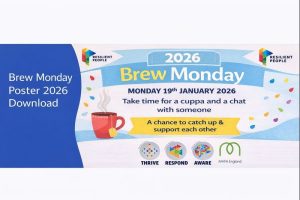
Poster Resource: Brew Monday 2026

16.01.2026

Poster Resource: Brew Monday 2026

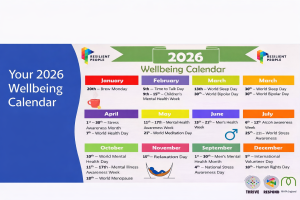
2026 Workplace Wellbeing Calendar: Using Awareness Days to Build Healthier, More Supportive Teams

13.01.2026

2026 Workplace Wellbeing Calendar: Using Awareness Days to Build Healthier, More Supportive Teams

Boosting Winter Mindset at Work: Practical Tools for Colder Days

05.12.2025

Boosting Winter Mindset at Work: Practical Tools for Colder Days

Stress Awareness – What’s all the fuss?

nsad-logo

It’s National Stress Awareness Day! But why is stress awareness so important? There is still a lot of misunderstanding about the effects of excessive pressure and what is and what is not ‘real stress.’ And in many organisations a macho culture still prevails, where working under extreme, prolonged pressure can be seen as a rite of passage. Personally I have worked in a number of such environments and I never saw the problem with it at the time. That was until I learned I had a damaged liver and became quite ill.

There has been lots of anecdotal evidence about the links between our physical and mental wellbeing but now research is catching up. In 2015 The University of Edinburgh published results of a 10 year study looking to connect psychological wellbeing and liver failure. The research involved 165,000 participants who were surveyed for mental distress. They were each tracked over 10 years and those who died had there reason for death recorded and categorised. The research found that those who had scored highly for signs of stress and depression were far more likely to suffer fatal liver disease. This pointed to a clear link between the psychological conditions of stress and depression and the physical health of the hepatic system.

To look at this another way; would many sensible people endure a job that required them to drink excessive amounts of alcohol every day, knowing the long-term damage they were likely causing to their body? It’s hard to imagine they would …

Perhaps one day we will view the exposure to excessive pressure in the same light as binge drinking? Perhaps one day we’ll understand the real damage being caused to our bodies in return for a few extra silver coins?

Until then we can at least continue to improve awareness and education in this area, making the workplace a safer environment for both body and mind.

National Stress Awareness Day is a great place to start or revitalise the efforts in your organisation. We have certainly got lots going on at Resilient People and are always happy to share our insights. Just give me a call if you think we might be able to help.

Barrie

Poster Resource: Brew Monday 2026

16.01.2026

Poster Resource: Brew Monday 2026

2026 Workplace Wellbeing Calendar: Using Awareness Days to Build Healthier, More Supportive Teams

13.01.2026

2026 Workplace Wellbeing Calendar: Using Awareness Days to Build Healthier, More Supportive Teams

Boosting Winter Mindset at Work: Practical Tools for Colder Days

05.12.2025

Boosting Winter Mindset at Work: Practical Tools for Colder Days

Employee Wellbeing – Getting Support from Senior Leaders

Some people charged with improving employee wellbeing are fortunate to work for companies where at least one senior leader is really on-board with the idea. They see the benefit of such action and ensure adequate resources are available to implement a wellbeing strategy that provides real impact. Of course, there are many others who are less fortunate and who have to fight for this kind of senior level support. So, if this is you, what can be done?

It’s tempting to create a fact-filled presentation outlining costs and potential savings, in fact this may have be requested, but in most cases it will only engage these leaders on an intellectual level; meaning, at best, they will think it’s a good idea but they won’t get passionate about it.

When trying to engage people’s hearts it’s usually best to give them some form of experience. Why is this important? Well, to quote Confucius, I hear and I forget; I see and I remember; I do and I understand. It’s this understanding that is important as understanding leads to belief and if senior leaders believe in the wellbeing programme then it’s far more likely to be successful.

An example of this idea in action was when, as part of a wellbeing focused conference for several hundred managers and leaders, Resilient People were asked to deliver a number of services in particular a 1 hour ‘highlights’ resilience training session. This session introduced delegates to the content of resilience training and allowed them to undertake a few interactive exercises. The session went down a storm and the CEO declared the training was a must and would be rolled out through their organisation. For the small team who had pulled the day together this was a massive victory. The one hour session probably achieved something no amount of business presentations or reports ever could. It got the senior leaders excited about their wellbeing strategy.

It doesn’t have to cost a lot of money to create these types of experience. Consider what your organisation already does in terms of wellbeing. Could this be adapted in some way, if needed, to create an event either specifically aimed at the leaders or something that would encourage them to take part. Do any of them have wellbeing interests already, such as cycling? If so, they are quite likely to get behind a cycling event to increase participation in the cycle to work scheme etc.

There are no hard and fast rules here. It’s about getting creative and disrupting the norm. Generally the more creative you are this stage the more hearts and minds you will engage and in-turn the stronger your wellbeing programme will become. Remember to make it relevant to your organisation and start with areas where there is already a decent amount of interest such as cycling or nutrition. And be passionate about your program as this is what will ultimately encourage others to get on board.

Thanks for reading

Poster Resource: Brew Monday 2026

16.01.2026

Poster Resource: Brew Monday 2026

2026 Workplace Wellbeing Calendar: Using Awareness Days to Build Healthier, More Supportive Teams

13.01.2026

2026 Workplace Wellbeing Calendar: Using Awareness Days to Build Healthier, More Supportive Teams

Boosting Winter Mindset at Work: Practical Tools for Colder Days

05.12.2025

Boosting Winter Mindset at Work: Practical Tools for Colder Days

Wellbeing – What’s the Return on Investment?

When talking to people about wellbeing strategies this is a question that comes up from time to time. It’s still common for those charged with researching or implementing a wellbeing strategy to believe that return on investment should be the core driver. It’s also the belief that causes so many wellbeing and training programmes to struggle or fail completely.

If a strategy is designed with the primary focus of reducing costs then staff will likely see this and assume negative motives lie behind the wellbeing movement. In these circumstances the well intentioned, hard work can backfire and reduce staff engagement levels. After all, nobody wants to feel like the ‘lucky’ turkey receiving extra portions of food in the run up to Christmas!

So what makes a better focus for a wellbeing strategy other than return on investment? Well an organisation or company could start by looking at their own values and mission. These tend to be positive and forward looking such as: ‘providing customers with uniquely creative solutions to their biggest problems’. For a company with such a mission would it not be better to build a wellbeing strategy which in one part helps employees to be more creative in problem solving? Surely helping the company to achieve its primary mission is a far more preferable approach than simply reducing the annual sickness level by a few days.

And don’t forget, as staff members become more engaged with wellbeing for positive reasons there will be natural improvement in both absenteeism and presenteeism levels anyway.

A great example of aligning wellbeing and company mission is Apple. Steve Jobs was a long time believer in mindfulness and openly attributed his creative success to a daily practice. It helped him to reduce stress, gain clarity and be his most creative self. Considering Apple’s mission at the time: to create tools for the mind that advanced humankind, do you think Steve Jobs introduced mindfulness and yoga sessions for all his employees to simply save a few dollars? Or rather to provide the best possible environment for developing creative minds to ensure the company’s success?

So, get to grips with your company or organisation’s mission and look how a wellbeing strategy can support it. Knowing this will make things a lot easier the next time a senior decision maker asks about the return on investment. Take the opportunity to outline how a healthier, more engaged workforce can help achieve the success that is the company or organisation’s purpose for existence.

Promoting the positive mission behind a wellbeing strategy and focusing on ‘value on investment’ is far easier and less risky than presenting a ‘fancily-wrapped’ cost cutting exercise.

Good luck and keep it fun …

Poster Resource: Brew Monday 2026

16.01.2026

Poster Resource: Brew Monday 2026

2026 Workplace Wellbeing Calendar: Using Awareness Days to Build Healthier, More Supportive Teams

13.01.2026

2026 Workplace Wellbeing Calendar: Using Awareness Days to Build Healthier, More Supportive Teams

Boosting Winter Mindset at Work: Practical Tools for Colder Days

05.12.2025

Boosting Winter Mindset at Work: Practical Tools for Colder Days

Don’t let stress ruin your relationship

Here is a scenario common in many relationships; both partners work in stressful jobs and then come home to the pressure of being a parent and running a home. This situation can often lead to arguments, intolerable frustration and, finally, splitting up. So what are the main pitfalls to avoid if you want to keep your relationship healthy?

Well, it was reported in the Telegraph this week that a study conducted by the Florida State University College of Business concluded, after interviewing 400 working couples, that the main thing to avoid is competing with each other about who had the worst day. This makes sense. It’s something we have all done at some time, become frustrated by the self-pity of another and retorted by explaining how bad things can really get … outlining a day in your life!

Of course, most of us would struggle to remember a time when this ever ended happily. Instead it just leads to more arguments, more frustration and more chance of splitting up. If you have children, it’s also very upsetting for them, not to mention unfair.

It is important to offer support to each other, to know when the other has had a particularly bad day and forgo your own need for a bit of sympathy. In fact, you will more than likely get a lot more support back when you need it the most if you’re prepared to give it to others. If you are going to survive the rigours of work life then you must have a place where you look forward to going, a place where you will get support when you most need it, and a place where you can enjoy your time away from work. This place should be your home.

The study also concluded that couples with the highest levels of support at home were more satisfied with their marriage, were more likely to say that they have a good relationship with their colleagues and concentrated better at work. They were also less likely to say they were tired after work, feel guilty about neglecting their family and were less critical of their spouse and children.

Poster Resource: Brew Monday 2026

16.01.2026

Poster Resource: Brew Monday 2026

2026 Workplace Wellbeing Calendar: Using Awareness Days to Build Healthier, More Supportive Teams

13.01.2026

2026 Workplace Wellbeing Calendar: Using Awareness Days to Build Healthier, More Supportive Teams

Boosting Winter Mindset at Work: Practical Tools for Colder Days

05.12.2025

Boosting Winter Mindset at Work: Practical Tools for Colder Days

Working too many hours can cause depression

A warning to all workaholics: Working too many hours overtime might greatly increase the chances of you suffering from depression. It has been reported in a number of newspapers this week that a study examining the work habits of more than 2000 UK Civil Servants discovered a credible link between hours worked and the likelihood of suffering from a major bout of depression. In fact, the study stated that working more than 11 hours a day led to a 2.5 times increase in the chance of suffering from severe depression when compared to those working a standard seven or eight hour shift.

It goes without saying the relationship between work and depression is complicated and even the mentioned study does not go so far as to suggest the link is concrete. There is enough evidence, however, to cause most of us to heed the warning. Like riding a motorcycle at high speeds will increase your chances of having an accident, pushing yourself too hard at work will increase the chances of becoming depressed . You need to have regard for you emotional wellbeing; you need to be honest with yourself and others about the way you feel, and you need to know when to slow things down before you make yourself ill.

Of course, for many of us working long hours is an everyday fact and it is important to remember that there are lots of things you can do reduce your stress levels and improve your mental wellbeing.

Poster Resource: Brew Monday 2026

16.01.2026

Poster Resource: Brew Monday 2026

2026 Workplace Wellbeing Calendar: Using Awareness Days to Build Healthier, More Supportive Teams

13.01.2026

2026 Workplace Wellbeing Calendar: Using Awareness Days to Build Healthier, More Supportive Teams

Boosting Winter Mindset at Work: Practical Tools for Colder Days

05.12.2025

Boosting Winter Mindset at Work: Practical Tools for Colder Days

7 Quick Steps to being more Assertive

Not being assertive enough is a common problem for most people. There are always times when we don’t speak up for ourselves – we decide it is best just to leave things alone. The problem is if we continually fail to assert ourselves when we are unhappy, this in turn has a compound effect on our confidence. If left unchecked it can lead to depression, anxiety disorders, anger management issues and low self-esteem.

Follow the steps below the next time you need to be assertive and learn how easy it can be:

Clearly state what it is you would like or would like to happen

  1. Listen to the other person’s point of view fully
  2. Keep your cool – becoming aggressive will only start a unproductive argument
  3. Use open body language and expressive gestures
  4. Maintain eye contact – although avoid glaring at the other person for the entire conversation!
  5. Look for the win-win solution – it’s the quickest way to achieve an agreement
  6. Practice – changing our behaviour takes time and being assertive becomes easier with practice.
Poster Resource: Brew Monday 2026

16.01.2026

Poster Resource: Brew Monday 2026

2026 Workplace Wellbeing Calendar: Using Awareness Days to Build Healthier, More Supportive Teams

13.01.2026

2026 Workplace Wellbeing Calendar: Using Awareness Days to Build Healthier, More Supportive Teams

Boosting Winter Mindset at Work: Practical Tools for Colder Days

05.12.2025

Boosting Winter Mindset at Work: Practical Tools for Colder Days

Workplace stress leads to overeating

Here is some information that will be very useful to anyone who is on, or looking to start, an improved food diet with the intention of losing weight. Obviously the biggest cause of being overweight is overeating – consuming more calories than you are burning off.  But did you know the biggest cause of over-eating is workplace stress! This information featured in an article from the Men’s Health magazine and was passed by Adam Mead, a dietician at Kingston Hospital in Surrey.

Why is this? The main reason is that carbohydrates have a grounding effect on us, so if you have recently being binging on bread, pasta or potatoes then there is a good chance you are feeling the effects of excessive stress levels. An indication that things are not right is if you are binging on such foods for more than two weeks. Such behaviour not only causes you to put on weight, it also puts you at risk of significant health problems if not addressed.

So, if you looking to lose weight then you should also consider managing your stress levels.  By keeping your stress in check then you will stand a better chance of controlling your hunger pangs.

Poster Resource: Brew Monday 2026

16.01.2026

Poster Resource: Brew Monday 2026

2026 Workplace Wellbeing Calendar: Using Awareness Days to Build Healthier, More Supportive Teams

13.01.2026

2026 Workplace Wellbeing Calendar: Using Awareness Days to Build Healthier, More Supportive Teams

Boosting Winter Mindset at Work: Practical Tools for Colder Days

05.12.2025

Boosting Winter Mindset at Work: Practical Tools for Colder Days

5 Reasons to get your Staff Healthy

Employers are now beginning to see that there is a link between work-related stress and a variety of physical and mental disorders. This is despite of the difficulty in proving this due to the fact that the majority of disorders that occur as a result of stress can also have alternative causes. The effects of work-related stress on ill-health can be found in physiological, cognitive, emotional and behavioural ways. Because of this many employers are now beginning to take both the mental and the physical wellness of their employees more seriously. Listed below are 5 quite obvious benefits this can have on your company.

1. It will save you money. Did you know absenteeism through illness costs British business £14bn a year? And with the average British worker taking nine days’ sick leave annually, its no wonder the costs are so crippling. Smaller businesses in particular are feeling the sting due to crucial members being away from their post. Forward-looking companies are trying to deal with sickness before it becomes a problem by looking for ways in which they can improve employees’ health and morale. Initiatives in this area might focus on taking up exercise, eating more healthily, tackling mental health issues and raising awareness of the effects of alcohol, tobacco and drugs.

2. It helps an ageing workforce. A particular consideration for a growing number of businesses is the ageing workforce. The number of people aged over 60 is forecast to increase by the end of the decade and, with the abolition of the fixed retirement age, growing numbers of people are choosing to continue working into their sixties and beyond. A combination of higher life expectancy and inadequate savings means that this trend is set to continue. Whereas this can be great for the business to maintain a stable and experienced workforce it can also present challenges to employers, one of the most significant being the health problems that accompany ageing. A wellness strategy incorporating an annual health screening could play an important role in minimising these.

3. It will boost productivity. It is well established that a healthy workforce is also a productive one. British researchers have demonstrated that employees who exercise regularly perform better at work, manage their time better and are mentally sharper and creative. Encouraging staff to use cycle-to work schemes that allow people to buy a bike tax-free for commuting, or organising on-site fitness activities such as yoga or Pilates can pay dividends for the worker and company alike. Simple initiatives such as encouraging staff to take regular screen breaks, walk around the office and go outside for their lunch hour can help reduce tiredness and stress.

4. It makes staff feel valued/loyal. Health and wellness schemes can make a significant contribution to a company’s morale, by making staff feel valued and appreciated. This in turn can lead to a reduction in absenteeism and staff turnover. According to research carried out by Investors in People, employees who feel their company does not care about their health and well-being are significantly more likely to look for a new job. Initiatives could include setting up an arrangement with a local gym through which staff can use the facilities at lower cost or running activities such as weight loss groups or company sports activities.

5. It makes for a more effective workforce. Research from the University of Bristol found that employees who exercised regularly were generally happier, felt better about themselves and were more forgiving of their colleagues, creating a better atmosphere in the workplace. Nutrition too can make a significant contribution to a happy and motivated workplace, with healthy eating boosting energy, well-being and long-term health. Furthermore, according to a study in the journal Population Health Management, workers who eat unhealthily are highly likely to be much less productive in the workplace. Simple measures such as displaying information on healthy eating in dining areas, liaising with catering staff and organising talks by nutritionists and dieticians can make a significant difference.

Poster Resource: Brew Monday 2026

16.01.2026

Poster Resource: Brew Monday 2026

2026 Workplace Wellbeing Calendar: Using Awareness Days to Build Healthier, More Supportive Teams

13.01.2026

2026 Workplace Wellbeing Calendar: Using Awareness Days to Build Healthier, More Supportive Teams

Boosting Winter Mindset at Work: Practical Tools for Colder Days

05.12.2025

Boosting Winter Mindset at Work: Practical Tools for Colder Days

The Importance of Sleep in building Resilience

One in three Britons suffer greatly from inadequate sleep. With things such as; stress, phones/IT and taking work home being the most common contributing factors.

However, the cost of all those sleepless nights is more than just bad moods and a lack of focus – I’m not talking about the potential pile of online shopping bills that mount up either! Regular poor sleep puts you at risk of serious medical conditions including obesity, heart disease and diabetes – Which can potentially shorten your life expectancy. People take sleep for granted but in reality a good solid night’s sleep is essential for a long and healthy life.

Most of us need around 8 hours of good quality sleep a night to function properly – but some need more and some less. What matters is that you find out how much sleep you need and then try to achieve it. In order to do this, make it a general rule that if you wake up tired and snappy and find yourself wanting to swap the keyboard for a pillow by lunch time, its time to listen to your body and give it what it needs even if that means missing your favourite nighttime programme.

Take a moment to step back and really think about your lifestyle. Answer this question honestly – do you check your smartphone for messages before you even get out of bed?? If so this means we are starting this whirlwind that is life from the second we open our eyes. We put on the radio or television to be given the news as it happens and when it happens, we check our emails constantly throughout the day; we sit at our computers and/or watch television late into the evening. It barely stops, with all these things around us it is no wonder we find it difficult to switch off and wind down, and so it is clear to see why many of us are having trouble sleeping.

Here are some simple tips you can do in order to help you wind down before tucking in:

  • Having a warm (not hot) bath can help your body reach a temperature that is ideal for rest.
  • Reading a book or listening to music instead of watching the television or trawling through pages of social media will help to relax your mind by distracting it.
  • Make your bedroom a relaxing place. The bedroom needs to be dark, quiet, tidy, smell fresh and be kept at a temperature of between 18c and 24c. Have a lamp with a low watt bulb at the side of the bed for reading.
  • Do not go to bed too hungry or too full. Try to eat something light before bed to keep the pangs of hunger at bay until morning.
  • What you drink before bed is also an important factor. Try not to drink anything with high amounts of caffeine; so if you normally enjoy a warm drink before bed, try a Horlicks or a hot chocolate rather than a coffee or a tea. However try not to drink just before turning in as this could lead to disrupted sleep due to waking in the night to empty your bladder.
  • Include physical activity in your daily routine. Regular physical activity can help you sleep better. Be careful though, timing is everything when it comes to exercise – too close to bedtime and it could make you too energised to fall asleep.
  • Consider healthy ways to manage stress. Start with something as simple as getting yourself organised, set your priorities and delegate tasks that can be delegated. Don’t forget that you need to take a break too so go out for a walk or share a coffee with a friend. Before you shut your eyes for the night make a list of all the things that are on your mind and then set it aside for tomorrow – doing this physically will put it out of your mind so that you are ready for sleep.

When it comes to changing your lifestyle in order to enhance your wellbeing we understand that sleep is one of the most difficult things to tackle as some people will quite rightly say you can’t force yourself to sleep. However if you take on board the above tips, which are just common sense things to do you will give yourself the best possible chance of getting a good night sleep. We wish you sweet dreams Zzz…

Poster Resource: Brew Monday 2026

16.01.2026

Poster Resource: Brew Monday 2026

2026 Workplace Wellbeing Calendar: Using Awareness Days to Build Healthier, More Supportive Teams

13.01.2026

2026 Workplace Wellbeing Calendar: Using Awareness Days to Build Healthier, More Supportive Teams

Boosting Winter Mindset at Work: Practical Tools for Colder Days

05.12.2025

Boosting Winter Mindset at Work: Practical Tools for Colder Days