Mental Health: Another Burden On The Youth

Guest Blogger Emily Owen, 16, writes about the stress and pressure that teenagers and young people are faced with

Many adults dismiss stress in teenagers as they don’t believe they have anything to stress about just because they don’t pay bills or have a job, but they have more stress now than adults had when they were teenagers with intense school expectations and regular exams, all to prepare for an entire month of back to back exams that are said to ‘dictate the rest of your life’. Though teenagers may experience stress like an adult, they cannot deal with it as they would, which is why it’s important to support any young people with stress and help them deal with it in a way which suits them.

Worryingly, around 82% of students suffer from stress and anxiety with 1 in 10 young people suffering from a mental health disorder. This shows how much pressure is on people in education nowadays, to the point it is causing them to fall ill and to suffer from stress, anxiety and depression.

Symptoms of stress to look out for are high irritability; trouble sleeping; a big weight change due to over or under eating; and being unable to relax. Most young people will find themselves stressed due to pressures from schools, whether it be due to upcoming and ongoing exams; large amounts of work both in school and at home; and fast approaching deadlines for assignments and essays. However, there could be other stresses in their lives such as peer pressure to do things they aren’t comfortable with so that they fit in and avoid bullying from their friends. This, combined with the pressure from school, could have a very negative effect on their mental health.

Stress affects people in two ways: physical and emotional. Teenagers and students suffering from stress from school may experience headaches, muscle pains and tension, chest pains and sleeping problems which in turn lead to fatigue. Due to the physical symptoms, high amounts of stress left untreated can lead to other health issues such as high blood pressure. Emotional symptoms include anxiety, sadness and frustration, which can all fuse together to make people feel worse, and untreated the symptoms can lead to depression.

Luckily, there are ways to manage stress with things such as regular physical activities and being surrounded by people that are found to be trustworthy, such as family and friends. It’s recommended to use ‘active’ ways to relive stress as ‘inactive’ ways, such as watching TV and playing video games, could lead to increased stress in the long term. If the stress is too much and methods like this do not help, it’s encouraged to seek help through mental health treatments such as therapies and by possibly joining support groups.

Emily Owen

Poster Resource: Brew Monday 2026

16.01.2026

Poster Resource: Brew Monday 2026
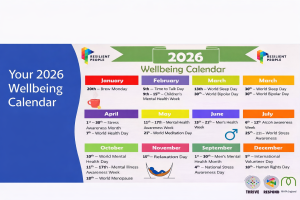
2026 Workplace Wellbeing Calendar: Using Awareness Days to Build Healthier, More Supportive Teams

13.01.2026

2026 Workplace Wellbeing Calendar: Using Awareness Days to Build Healthier, More Supportive Teams

Boosting Winter Mindset at Work: Practical Tools for Colder Days

05.12.2025

Boosting Winter Mindset at Work: Practical Tools for Colder Days

Weather The Storm

Living in such an uncertain time can have a great impact on your life and of those around you. As well as experiencing anxiety and low mood, symptoms you might also experience include physical effects such as pain, appetite change and sleep problems. The global situation isn’t just a storm in a teacup so how can you look after yourself come rain or shine? Read our tips to help you weather the storm:

Don’t Forget Your Umbrella!

There are some things you just can’t change: if it rains, there is nothing you can do. But you can make a difference to how you cope. You can take an umbrella out with you. You can button up your rain coat. You can pull on your wellies. You don’t have to face the stormy weather without waterproofs, just like you don’t have to cope with this situation without support. This might be in the form of talking to a friend or family member; a peer support group; or advice from organisations available to support you with your wellbeing and mental health. Building your support network in what ever combination works for you as an individual can give you the shelter you need from the storm and make a vital difference.

Shower Yourself with Self-Care

If you can feel a gathering storm, take refuge in looking after yourself. Completing an activity you enjoy, catching up on sleep or just shutting the curtains and having a PJ day can be just what you need to brighten your day.  Being able to spot your own signs and symptoms can help to put self-care in place in the early stages. Self-care should be part of your routine: even the sunshine has a little rest day now and then so taking time out for yourself can play a part in improving the forecast and your mood. Sometimes you need to take a rain check and focus on yourself.

Throw Caution to the Wind

Changing your routine or trying something new can be a benefit to your mind and body. Learning a new skill, achieving a challenge or re-engaging with an existing hobby can improve self-esteem, increase wellbeing and give access to new learning and friends too! Any activity that promotes the release of endorphins or ‘happy hormones’ can be a real benefit to your mental health because it stimulates your mind and body as well as encouraging mental development and growth.

Sunshine on a Rainy Day

It can be easy to fall into a pattern of thinking that is quite negative. Instead of asking yourself ‘Why does it always rain on me?’, try to think more positively about the circumstances you are in. Although coping with the new and difficult situation we face can be challenging, research shows that gratitude is powerfully and reliably linked with greater happiness. Thinking about the things that you are grateful for nurtures positive emotions, helps you to recognise good experiences and supports in fostering strong relationships with those around you.

Poster Resource: Brew Monday 2026

16.01.2026

Poster Resource: Brew Monday 2026

2026 Workplace Wellbeing Calendar: Using Awareness Days to Build Healthier, More Supportive Teams

13.01.2026

2026 Workplace Wellbeing Calendar: Using Awareness Days to Build Healthier, More Supportive Teams

Boosting Winter Mindset at Work: Practical Tools for Colder Days

05.12.2025

Boosting Winter Mindset at Work: Practical Tools for Colder Days

Let’s Put the ‘Men’ in ‘Mental Health’

One in four people experience a mental health condition every year, yet talking about mental health carries a greater stigma than talking about health issues. The facts speak for themselves: 1 in 8 men suffer from a common mental health condition. Suicide is the biggest killer in men under 45. In the UK, men are three times as likely to take their own lives than women and it has consistently accounted for approximately three-quarters of all suicides in the UK since the mid-90s.


Seeking or accepting help for a mental health condition can be a real challenge. Admitting that they need help can seem like a sign of weakness to some men and this can mean that they feel unable to ask for help. This is perpetuated by sexist phrases, such as ‘Man up’ or being told to ‘Be a man’. Phrases like this suggest that showing emotions such as sadness or sharing their feelings is unacceptable for men. There is a false stereotype of a ‘real man’ where the characteristics isolate and force them to hide their true emotions. Unfortunately, it is this concealment that can lead to serious mental health problems and in the worst case scenario, suicide.

Instead of seeking support, often they turn to unhealthy ways to cope with their mental health, such as through substance abuse, anger and violence or self-medication through alcohol or drugs. This is why men are twice as likely to meet the criteria for alcohol dependence. Worryingly, alcohol can exacerbate depression and can increase impulsive behaviours, making it a risk factor for suicide.

Other risk factors include workplace pressure and the responsibility that some men may feel for their families and their ability to protect them by being the ‘breadwinner’ of the family. In addition, it can be that men may find themselves isolated because of their circumstances and unable to reach out. The director of a company; a retired, widowed man; a young apprentice: all of these people can share the same sense of loneliness and isolation, regardless of their background, class, experience or financial status. Someone who is experiencing depression or other mental health conditions may be at risk of suicide, but this is not always the case.

Suicide has a devastating ripple effect on family, friends and communities who may struggle to understand why someone has decided to take their own life. They may not have been aware of the suffering that the person who has completed suicide may have been in and this can make it incredibly hard to come to terms with.

Suicide is distressing, but it can be prevented by knowing the warning signs and being proactive in supporting with someone why may be presenting these. Some of the signs to look out for are:

  • Expressing the intent to hurt or kill themselves
  • Writing or talking about death
  • Hopelessness
  • Showing feelings of rage or anger
  • Acting in a reckless way without consideration of the consequences
  • Increasing alcohol or drug use
  • Isolating themselves from friends, family or society.
  • Trouble in sleeping
  • Saying goodbye or ‘putting affairs in order’
  • Significant changes in mood

This list is not exhaustive and someone who completes suicide may not present any of these signs at all. If someone you know or care about is presenting some or all of these signs, make sure that you talk to them directly about how they might be feeling. You could suggest visiting the GP with them to support them. If you think there is an immediate danger to the person, phone 999 and do not leave them unattended. If you yourself recognise these signs in yourself or want to access help for a mental health condition, read below for some advice about where to find advice and support.

HOW CAN YOU ASK FOR SUPPORT WITH YOUR MENTAL HEALTH

Ignore the old adages to ‘man up’ or to ‘grow a pair’. The strongest thing a man can do is seek help if they are struggling with their mental health. This can sometimes feel like a great obstacle. It is common to feel unsure of who to ask and what reaction will be received. It’s ok to ask for help even if you are not sure if you are experiencing a specific mental health condition. See below for some sources of support that you could access:

YOUR GP

Your GP can help identify support that is appropriate to your needs. They might refer you to other services, such as talking therapies; they might prescribe medication; or they might give you advice and information to help you.

A Family Member or Close Friend

Because they know you so well, it is likely that they will have already spotted that you might not be coping as well. Talking to someone who already knows you can relieve some of the worries about judgement. They might be able to support you with errands or responsibilities to take some of the pressure off you in the short term.

Trained Therapist

You might be referred by your doctor or in some cases, you can contact therapists directly. Therapists are trained to discuss and explore individual issues in a confidential environment. For some people, this feels less threatening than discussing their emotions with someone close to them.

Peer Support

Some communities have peer support groups for like-minded people or people who are experiencing the same condition. They meet regularly and this can be a source of additional information as well as a place to find out strategies to help you cope.

Workplace Support

Some workplaces have EAP (Employee Assistance Programmes) or support groups where you can access information support and help in a completely confidential setting.

We have a range of services to support mental health and wellbeing in your organisation. Please get in touch for more information: [email protected] or 01977 210220

Poster Resource: Brew Monday 2026

16.01.2026

Poster Resource: Brew Monday 2026

2026 Workplace Wellbeing Calendar: Using Awareness Days to Build Healthier, More Supportive Teams

13.01.2026

2026 Workplace Wellbeing Calendar: Using Awareness Days to Build Healthier, More Supportive Teams

Boosting Winter Mindset at Work: Practical Tools for Colder Days

05.12.2025

Boosting Winter Mindset at Work: Practical Tools for Colder Days

Asking for Help with Your Mental Health

Depression can be something that is incredibly hard to talk about, not least for the person who is experiencing this condition. Often, the person with depression is not fully aware of their symptoms. It may have developed over a number of weeks or months, and it can be difficult at first to recognise that this is not just a bad day or that they are a bit run down. Depression affects mood, thoughts and behaviour, so if feelings of isolation, hopelessness, exhaustion and withdrawing from loved ones and friends are on-going, then it is time to talk to someone.

Some of the symptoms of depression include:

  • Continuous low mood or sadness
  • Feeling hopeless or helpless
  • Low self-esteem
  • Feeling shame or guilt
  • Irritability and intolerance
  • Loss of interest in activities that have previously been enjoyed
  • Lack of motivation or interest
  • Difficulty in making decisions
  • Having suicidal thoughts or harming yourself

Support can be found from a number of different places, including friends and family, your GP and specialist services. Taking that first step can sometimes feel like the hardest obstacle to overcome.

Below are some tips for seeking help:

Know that depression is not a sign of weakness

Recognise that your feelings and experiences do not mean that you are not strong or that you should feel ashamed. Depression is a result of a mix of environmental and biological factors and can be experienced by anyone at any time regardless of background, experience, age or gender.

Avoid the temptation to isolate yourself

This condition can create feelings of lethargy, irritation and hopelessness. These emotions can make you want to hide away and be alone, but spending time with other people can be a real benefit to you on your road to recovery.

Talk about your feelings

This can be difficult, especially as some of your emotions might be difficult to articulate or to share with others. But having a support network is key and sharing your thoughts and feelings can mean that the people have a greater understanding of how they can help you. They may be able to give practical help with errands or responsibilities, accompany you to medical appointments, or just go for a walk or to the cinema with you. Don’t underestimate the difference that sharing with someone you trust can make – the phrase ‘a problem shared is a problem halved’ is relevant here.

Seek help from a professional

Friends and family can be a great support, but there are also people who specialise in the treatment and support of someone with depression and they can help to personalise a treatment plan for you. This could be through medication, but they may also be able to direct you to talking therapies, activities to boost endorphins or support groups.

Asking for help takes courage and can be a challenge in itself, but it can also be a vital step in helping you gain control and equilibrium. Don’t suffer in silence – take a small step to make a big difference to your health and wellbeing.

Poster Resource: Brew Monday 2026

16.01.2026

Poster Resource: Brew Monday 2026

2026 Workplace Wellbeing Calendar: Using Awareness Days to Build Healthier, More Supportive Teams

13.01.2026

2026 Workplace Wellbeing Calendar: Using Awareness Days to Build Healthier, More Supportive Teams

Boosting Winter Mindset at Work: Practical Tools for Colder Days

05.12.2025

Boosting Winter Mindset at Work: Practical Tools for Colder Days

How to Support Someone with Their Mental Health at Work

Mental Health in the workplace is a hot topic – and why not when research shows that one in four of us will experience a mental health problem this year. That means that it is more than likely that you work with someone with a mental health condition right now.

The Mental Health Foundation has recently completed research that suggests that on average we say “I’m fine” when someone asks us how we are fourteen times per week, but actually we only mean it 19% of the time! Knowing our colleagues can be hard when we have an ever-growing list of priorities to work through, but as we spend the majority of our week with them, why not make an effort to get to know who you work with? Social relationships are essential for promoting wellbeing so what can you do to support your workmates? See our handy help sheet to give you some tips

WHERE AND WHEN

If you want to offer support to a colleague who seems to be struggling, make sure it is not at a time that is very busy or time-limited, or in a place that doesn’t afford any privacy. Your colleague needs to feel comfortable to share their emotions.

ENCOURAGE THEM TO SEEK SUPPORT

Gently ask if they have considered seeking support or if they have someone they can trust to talk to. You could even offer to go to an appointment with them. Seeking help from Employee Assistance Programmes or their GP can offer them specialist support to give them tools to support their feelings.

LISTEN

Asking open-ended questions such as ‘How did that make you feel?’ instead of ‘Did that make you feel low?’ and really giving your work colleague chance to talk is one of the most helpful things you can do. Having someone listen to their concerns can be a positive step in the right direction to seeking help or feeling a little bit more in control. You don’t need to give solutions – just showing understanding and that you care speaks volumes about the support that they have even if they might not have realised it before.

LEAVE YOUR DOOR OPEN

Your colleague might not feel able to open up right away, but letting them know you are there for them and that your door is open (figuratively or literally depending on where you work) shows that you are there to support when they are ready – and that can make such a difference to someone who might feel alone.

BE KIND

Especially to those that might be showing signs of stress and poor mental health, but don’t forget that anyone at any time can be fighting a battle that we can’t see. Taking the time to say hello to people, making a cup of tea for someone or asking how someone’s weekend has been only takes a minute, but it can make a lot of difference to someone who may be struggling.

ALLEVIATE SOME OF THE STRESS

You may be able to help a colleague by doing a favour or small job for them. This doesn’t mean taking on their workload and adding additional stress to your own: something simple like running a small errand for them or washing up a tea cup are all little things that can make a big difference.

IF THERE IS IMMEDIATE DANGER, SEEK HELP

You don’t need to have all the answers. If you feel like someone has the potential to cause harm to themselves or if their emotions and feelings are threatening to overwhelm them, you can seek support from the Samaritans, their GP, a family member or your employer (either line manager or HR).

NON-JUDGEMENTAL

People with poor mental health can often feel like the world is a critical and disapproving place. They may feel vulnerable and self-conscious about how they are feeling. Listening and being neutral in your opinions and answers can help your colleague to share and explore their feelings in a non-threatening way and without worry. They may not always make the best decisions for themselves, but you can always encourage them to make sure they are looking after themselves such as checking they have taken some time to have a break, grab a drink and off load if they need to without the worry of judgement.

GIVE THEM SPACE FROM THEIR WORRIES

Being there for someone and remembering to ask how an appointment went or how they are doing is a vital part of supporting someone. However, it is important to give them space to work through their emotions, including giving them time away from thinking about them. Talking about other light-hearted topics can be a useful tonic and a way to take their mind off some of their worries.

Resilient People are here to help support your organisation through training and wellbeing services to build positive mental health in the workplace all year round. Our ‘RESPOND’ course has been developed especially for managers to give them confidence and knowledge in supporting their teams. This includes how to spot signs and symptoms, how to have a conversation with a member of their team and how to build resilience for challenge and change.

We have a range of services to support mental health and wellbeing in your organisation. Please get in touch for more information: [email protected] or 01977 210220


Poster Resource: Brew Monday 2026

16.01.2026

Poster Resource: Brew Monday 2026

2026 Workplace Wellbeing Calendar: Using Awareness Days to Build Healthier, More Supportive Teams

13.01.2026

2026 Workplace Wellbeing Calendar: Using Awareness Days to Build Healthier, More Supportive Teams

Boosting Winter Mindset at Work: Practical Tools for Colder Days

05.12.2025

Boosting Winter Mindset at Work: Practical Tools for Colder Days

Happiness

All suffering is caused by desire and craving – The Second Nobel Truth, Buddhism

There is no need to be a Buddhist to understand this simple truth. There seems to an innate drive in all of us to want more, whether it is nice food, time with loved ones or material possessions. There is always more to be had. And while we desire more we start to generate negative emotions, a slight feeling of missing out, perhaps, or the full-on envy of another.

The reason for mentioning the second noble truth is, simplicity. In a world where complexity of life is, for many, an overwhelming burden, perhaps simplifying life in some way is the best route to increased happiness. It can be the difference between endlessly chasing big goals that are no more tangible than a rainbow, and seeking out little pleasures on a daily basis. All the evidence suggests the latter will increase subjective happiness, whereas the former will more likely add to negative feelings. It’s important to remember that no single achievement will leave you happy for the rest of your life. So why is this?

Research by Professor Sonia Lyubomirsky states individual happiness is affected by three factors. The first is our DNA. Lyubomirsky states 50% of our happiness relates to a genetic set-point which we are born with and cannot change. The next factor is our circumstances, our career, house, family and car etc. These are the things many people strive to improve to increase their happiness. Unfortunately, these circumstances only contribute a measly 10% of our happiness! The remaining 40% is derived from thoughts and behaviors. How do we explain the events in life – positively or negatively. Is a stretching situation a challenge or something to be avoided?

This is the exciting factor because here is where we can make a real difference to our subjective happiness. And the best bit; it doesn’t cost money, take years of effort or require you to be anybody other than yourself. Start simple with some of the below exercises:

1. Jot in Your Journal – Over a period of 4 weeks, keep a journal listing three new things each day for which you are grateful. Doing this over time trains your brain to start spotting the good things in life, prioritising them over the negative. You can also look back on your journal when you’re feeling a little down.

2. Mindful Moment – Set some time aside to do something you really enjoy, such as taking a walk, having a coffee in the garden or enjoying a lovely, hot bath. Really savour this event, thinking about your senses and the details you experience while you complete it. Focusing on these details brings you fully into the here-and-now and reminds you to appreciate tasks you may not usually have time for or complete on autopilot.

3. Act of Kindness – Giving someone a compliment, holding a door open for someone, making someone a cup of tea to cheer them up: all of these actions can reduce stress, boost our immune systems and release lots of feel-good emotions. Not only that, happiness is contagious! Even just a smile can brighten someone’s day!

4. Be Nurtured by Nature – When was the last time you went for a walk and enjoyed being outside? As well as the obvious benefits that fresh air and exercise can offer, being in nature can reduce negative emotions, such as fear and stress, and increase happiness. Even just 30 minutes of walking can have a significant impact on your feelings and wellbeing!

5. Re-connect with a Relative – Making time to phone or text someone you haven’t spoken to for a while, either a friend or relative, can be a joyful job, giving you time to catch up, reconnect and check in with someone you care about. Our busy lives can mean that communication with loved ones can be limited to a quick ‘like’ on Facebook, but making the time to really speak to someone and maintain connections with people can keep things in perspective, offer essential support to both of you and is key to a happy and healthy life.

6. Down your Devices – turn off all of your electronic devices (phones, tablets, laptops). Without these distractions, you may find time to do something completely different, such as cooking for enjoyment, chatting with a friend or just giving yourself a break. Some adults spend as much as 24 hours a week using social media. Imagine what you could do with that time if you have some device downtime!

Poster Resource: Brew Monday 2026

16.01.2026

Poster Resource: Brew Monday 2026

2026 Workplace Wellbeing Calendar: Using Awareness Days to Build Healthier, More Supportive Teams

13.01.2026

2026 Workplace Wellbeing Calendar: Using Awareness Days to Build Healthier, More Supportive Teams

Boosting Winter Mindset at Work: Practical Tools for Colder Days

05.12.2025

Boosting Winter Mindset at Work: Practical Tools for Colder Days

Mindfulness

What is Mindfulness?

Mindfulness is the action of focusing awareness completely on the present moment. It is about observing and acknowledging current feelings, thoughts, emotions and physical sensations in a calm and almost detached way that in fact allows you to be much more aware and connected to yourself. Consider how often you give yourself the time and space to just stop and think, to be aware of that exact moment of the here and now, of the sensation of how you breathe or the sounds you can hear. Becoming more aware of your present moments can ground you and calm you, allowing you to experience simple things that you may have begun to take for granted or stopped noticing, something that is so easy to do when you are caught up in the whirlwind of everyday life.

Mindfulness Tips

Some people find mindfulness challenging because their mind is constantly crowded in with questions, thoughts and plans. When your days are so busy and bustling, being able to switch off for just a few minutes can seem impossible, but the benefits really are worth it. Not only does it help you to enjoy part of life that you may have been missing while on ‘autopilot’, it also allows you to become aware of your thoughts and emotions, to experience the present moment and to take a break. Here’s some tips for mindfulness that you can try today:

The Here and Now

How often have you taken just five minutes sit in silence and focus on your immediate surroundings: the tick of the clock, the rustle of the breeze as it wafts from an open window or the hum of the computer. As we dash from one task to another, through each item on our to-do list, we miss the things that are happening every minute of every day. Stopping to become aware of these things engages you in the here and now and gives you some breathing space from thoughts and scheduling.

Make Time and Keep Time

Planning a mindful moment into your day is as important as planning in time for lunch or a toilet break. Although it might feel like you can’t spare that time because of all of the different things you have to do, in fact this time can calm and settle you in an otherwise frantic day, making you more effective and refreshed to pick your schedule back up afterwards. Perhaps the journey to or from work might give you an opportunity to do this or even five minutes as you lay in bed at night time before you go to sleep. Whenever works for you is fine, but do make sure you make the time.

Full Body Scan

A really effective way to practise mindfulness is to do a ‘full body scan’. This is where you start at the top of your head and work down your body, focusing on the feelings and sensations as you move through each part. Actively work through each body part in turn from closing your eyes, relaxing your jaw, feeling the sensation of deep breaths expanding your stomach as you breathe in, becoming aware of the tingle and throb of your fingers as blood circulates through your body right down to the toes cushioned in your shoes. This awareness and observation of your body will calm and ground you, giving you the chance to be aware and conscious of yourself.

Thought trains

Many people can find thoughts, worries and ideas swarming in their minds, preventing their concentration and focus on mindfulness. Mindfulness isn’t about dismissing these thoughts, but observing them before letting them go. A good way to think of this is imagining thoughts coming into your mind like a train that pulls into a station, pausing then departing again. During mindfulness, thoughts will come into your mind, but you don’t have to indulge in the thoughts, you can let the train depart without getting on board.

Taking Time for You

Some people practise yoga or go walking as a form of relaxation and a time to focus on some things other than work; others find a bubble bath and a glass of wine at the end of a long day gives them time to switch off. Finding something that works for you is important and making time to listen to your body and take a moment to pause is essential to make sure your body and mind have the time to rest and rejuvenate.

Remember that mindfulness is about taking a moment to be aware and engaged with your body and mind. Make sure you actively practise self-care by listening to your needs and not allowing them to become drowned out by the hustle and bustle of everyday life.

The Importance of Sleep in building Resilience

Poster Resource: Brew Monday 2026

16.01.2026

Poster Resource: Brew Monday 2026

2026 Workplace Wellbeing Calendar: Using Awareness Days to Build Healthier, More Supportive Teams

13.01.2026

2026 Workplace Wellbeing Calendar: Using Awareness Days to Build Healthier, More Supportive Teams

Boosting Winter Mindset at Work: Practical Tools for Colder Days

05.12.2025

Boosting Winter Mindset at Work: Practical Tools for Colder Days

Don’t let stress ruin your relationship

Here is a scenario common in many relationships; both partners work in stressful jobs and then come home to the pressure of being a parent and running a home. This situation can often lead to arguments, intolerable frustration and, finally, splitting up. So what are the main pitfalls to avoid if you want to keep your relationship healthy?

Well, it was reported in the Telegraph this week that a study conducted by the Florida State University College of Business concluded, after interviewing 400 working couples, that the main thing to avoid is competing with each other about who had the worst day. This makes sense. It’s something we have all done at some time, become frustrated by the self-pity of another and retorted by explaining how bad things can really get … outlining a day in your life!

Of course, most of us would struggle to remember a time when this ever ended happily. Instead it just leads to more arguments, more frustration and more chance of splitting up. If you have children, it’s also very upsetting for them, not to mention unfair.

It is important to offer support to each other, to know when the other has had a particularly bad day and forgo your own need for a bit of sympathy. In fact, you will more than likely get a lot more support back when you need it the most if you’re prepared to give it to others. If you are going to survive the rigours of work life then you must have a place where you look forward to going, a place where you will get support when you most need it, and a place where you can enjoy your time away from work. This place should be your home.

The study also concluded that couples with the highest levels of support at home were more satisfied with their marriage, were more likely to say that they have a good relationship with their colleagues and concentrated better at work. They were also less likely to say they were tired after work, feel guilty about neglecting their family and were less critical of their spouse and children.

Poster Resource: Brew Monday 2026

16.01.2026

Poster Resource: Brew Monday 2026

2026 Workplace Wellbeing Calendar: Using Awareness Days to Build Healthier, More Supportive Teams

13.01.2026

2026 Workplace Wellbeing Calendar: Using Awareness Days to Build Healthier, More Supportive Teams

Boosting Winter Mindset at Work: Practical Tools for Colder Days

05.12.2025

Boosting Winter Mindset at Work: Practical Tools for Colder Days

Needles, but no drugs …

In a society where a large number of men struggle with mental illness in silence because they find it hard to express how they are feeling, it’s always nice to see new forms of help. The traditionally considered non-masculine past-time of knitting is gaining popularity with men thanks to celebrity backing from the likes of Russell Crowe, David Arquette and Ryan Gosling.

NHS studies has found that a couple of hours spent knitting woolly items can help reduce stress, fight depression, improve mental illness recovery, boost self-esteem, aid recovery from addiction and help you to be more mindful. It’s no wonder men-only knitting classes are starting to crop up as more and more men are picking up a pair of needles.

I wonder if any organisations have considered this? Some type of workplace knitting challenge could be made fun, open to everyone and would be cheap to set up. It could even be designed to support a charitable cause!

Just a thought …

Poster Resource: Brew Monday 2026

16.01.2026

Poster Resource: Brew Monday 2026

2026 Workplace Wellbeing Calendar: Using Awareness Days to Build Healthier, More Supportive Teams

13.01.2026

2026 Workplace Wellbeing Calendar: Using Awareness Days to Build Healthier, More Supportive Teams

Boosting Winter Mindset at Work: Practical Tools for Colder Days

05.12.2025

Boosting Winter Mindset at Work: Practical Tools for Colder Days

I never went to a female suicide

As we approach mental health week I couldn’t help reflecting on why I became involved in the business of personal wellness. See, I’ve always been interested in physical health and maintained a steady effort over the years to keep a good level of fitness. For many years however, I ignored my mental health believing I wasn’t one of the ‘weak ones’ who had to worry about such things. I was eventually proved wrong, of course.

Through my own experiences of dealing with mental health and, in particular, supporting and managing officers through extreme trauma I became more aware of the often silent and besieging effects of mental health problems, particularly on men.

I highlight the cause of men because so much of this problem is hidden. Men often feel unable to reach out for help and often allow things to build up, becoming victims of their own masculinity. To illustrate my point: in my police career I attended a number of tragic suicides; I know of at least four officers who took their own lives and so did a member of my own family. Here’s the thing, they were all men – I never actually attended a female suicide. Of course females do take their own lives, and when they do it is every bit as tragic. My own experience however simply highlights how much this is a bigger problem for men.

Here are some startling statistics:

  • In 2013 8 out of 10 suicides in the UK were men
  • Suicide is the biggest cause of death in men under the age of 45
  • In the last decade there has been a marked increase in male suicides
  • As many as 4 in 10 men have contemplated suicide at some time or other

There are often complex issues leading to the act of suicide but one of the simplest and most effective steps a person or organisation can take to help reduce this problem is to promote awareness. Through increasing awareness we can help reduce the stigma surrounding men’s mental health and make it easier for men to share their problems and receive appropriate support.

Remember all men are at risk of mental illness. Many men never show any obvious signs other than appearing a little down or distant. And those who appear the strongest are often most at risk as they seem to go through life with the weight of the world on their shoulders!

If you would like to know more about Mental Health Awareness week from the 16th to 22nd May you’ll find some interesting resources here

Barrie Penrose

Poster Resource: Brew Monday 2026

16.01.2026

Poster Resource: Brew Monday 2026

2026 Workplace Wellbeing Calendar: Using Awareness Days to Build Healthier, More Supportive Teams

13.01.2026

2026 Workplace Wellbeing Calendar: Using Awareness Days to Build Healthier, More Supportive Teams

Boosting Winter Mindset at Work: Practical Tools for Colder Days

05.12.2025

Boosting Winter Mindset at Work: Practical Tools for Colder Days