Looking After Those Who Look After Our Communities: Supporting the Mental Health of Housing Professionals

Every day, housing professionals help people through some of the most challenging moments of their lives. Whether supporting someone facing homelessness, responding to anti-social behaviour, managing safeguarding concerns or helping vulnerable tenants remain safely housed, today's housing roles involve far more than managing properties.
Behind every tenancy is a person, and often behind that person is a complex set of circumstances that require compassion, patience and resilience. Housing professionals regularly find themselves supporting people experiencing poor mental health, financial hardship, domestic abuse, addiction, loneliness and trauma.
While much attention is rightly given to the wellbeing of tenants, it is equally important to consider the wellbeing of those providing that support.
The Wellbeing at Work in Housing research, commissioned by the Chartered Institute of Housing (CIH) and undertaken by the University of Worcester, set out to understand "what needs to be done to support the wellbeing of people working in housing and help maintain the high levels of professionalism, compassion and effectiveness their roles demand." It is a timely reminder that supporting employee wellbeing is not simply the right thing to do—it is fundamental to delivering excellent services for tenants.
Housing Has Changed
Housing has always been a people-focused profession, but the nature of the work has evolved significantly over recent years.
Alongside managing homes and communities, housing professionals are increasingly responding to wider social challenges. Rising living costs, increasing demand for affordable housing, pressures on health and social care services, and growing levels of mental ill health mean many frontline teams are supporting people whose needs extend well beyond housing itself.
A routine day might involve helping someone who is struggling to pay their rent, supporting a tenant experiencing domestic abuse, responding to safeguarding concerns, working alongside mental health services or assisting someone at risk of homelessness.
These situations require empathy, sound judgement and excellent communication skills. They also require staff to absorb difficult conversations and emotionally demanding situations on a regular basis.
It is this emotional labour—rather than simply workload—that is becoming one of the defining features of modern housing roles.
The Emotional Cost of Caring
The CIH research found that many housing professionals experience high levels of emotional labour: the effort involved in managing their own emotions while supporting others through distressing circumstances.
Unlike physical workload, emotional labour is often invisible. Staff may remain calm and professional throughout difficult conversations while internally carrying the emotional weight of what they have heard.
"Professionals working in housing and homelessness are clearly resilient... they have adapted to a 'new normal', but this has not come without a cost."
This observation from the research perfectly captures the reality faced by many housing professionals. Resilience does not mean people are unaffected by difficult work. It means they continue showing up, supporting others and doing their best despite the emotional demands placed upon them.
The report goes on to describe feelings of anger, exhaustion, isolation, worry and anxiety among staff and leaders alike. These were not isolated experiences but recurring themes across the organisations that took part in the research.
Over time, continual exposure to other people's distress can contribute to emotional exhaustion, compassion fatigue and burnout. Many participants described taking work home mentally, replaying conversations or worrying about tenants long after the working day had ended.
This isn't a sign of weakness. In many ways, it reflects the compassion and commitment that attracts people to the housing profession in the first place. However, without appropriate support and opportunities to recover, even the most dedicated professionals can begin to feel overwhelmed.
When Caring Isn't Enough
One of the most striking themes within the research was the frustration experienced by staff who knew what someone needed but were unable to secure it.
A housing officer may recognise that a tenant urgently requires mental health support, but waiting lists are long.
A neighbourhood manager may know that a family needs larger accommodation, but there simply isn't suitable housing available.
Another colleague may spend weeks trying to access external services that are already stretched beyond capacity.
These situations can create what psychologists describe as moral distress—the emotional discomfort that arises when people know the right course of action but are prevented from achieving it because of circumstances outside their control.
Over time, repeatedly facing these situations can leave staff feeling helpless, frustrated and emotionally drained. Often, it is not the difficult conversations themselves that have the greatest impact, but the feeling that, despite doing everything they reasonably can, it still isn't enough.
The accompanying Mental Health at Work Commitment Guide recognises this reality with refreshing honesty:
"Sometimes, everything that we can do just isn't enough. That can be hard. It can take its toll."
For anyone working in housing, those words will likely feel familiar.
Recognising the Warning Signs
Supporting employee wellbeing begins with recognising when someone may be struggling.
The signs are not always obvious, particularly in professions where people are accustomed to putting others first.
Managers may notice changes such as increased irritability, withdrawal from colleagues, reduced confidence, difficulty concentrating, increased sickness absence or a loss of enthusiasm for work. Others may continue performing well while finding it increasingly difficult to switch off outside work.
At a team level, higher staff turnover, reduced morale, increased conflict or growing levels of presenteeism can all indicate that emotional pressures are beginning to affect the wider workplace.
Spotting these signs early creates opportunities for supportive conversations before problems become more significant.
What Makes the Biggest Difference?
The encouraging message from the research is that organisations are far from powerless.
One of its strongest conclusions was the need for "strong networks of professional and social support at all levels to enhance wellbeing and thereby support resilience and enhance performance at work."
While individual coping strategies remain important, the greatest influence on employee wellbeing often comes from the culture created by the organisation itself.
Supportive managers who check in regularly, leaders who openly discuss mental health, opportunities to reflect after difficult situations and psychologically safe workplaces all help reduce the emotional impact of demanding work.
The research also highlights the importance of creating psychologically informed workplaces. In practice, this means recognising that emotionally demanding work affects people differently, understanding behaviour in context and creating opportunities for reflection, learning and support. It is about building environments where asking for help is viewed as a sign of professionalism rather than weakness.
Employees are far more likely to seek support when they believe they will be listened to without judgement and when conversations about wellbeing are treated as a normal part of working life rather than something reserved for times of crisis.
Small actions, repeated consistently, often have the greatest impact.
Creating Healthier Housing Workplaces
Creating a mentally healthy workplace does not require organisations to solve every challenge facing the housing sector. However, it does require recognising that emotionally demanding work deserves emotionally informed leadership.
Organisations can make a meaningful difference by:
- Encouraging regular wellbeing conversations rather than waiting until someone reaches crisis.
- Equipping managers with the confidence and skills to recognise concerns and have supportive conversations.
- Recognising the emotional demands of frontline roles and allowing space for reflection after particularly difficult situations.
- Creating opportunities for peer support so colleagues do not carry challenging experiences alone.
- Embedding wellbeing into everyday leadership, making it part of organisational culture rather than a one-off initiative.
These actions are often simple, but together they create workplaces where people feel valued, supported and better equipped to continue making a difference.
Looking After Those Who Look After Others
Housing professionals make an extraordinary contribution to our communities every day. They help people remain safe, secure and hopeful during some of life's most difficult circumstances.
The CIH research reminds us that the future of the housing profession depends upon attracting, developing and retaining compassionate, skilled people. Supporting employee wellbeing is therefore not simply another workplace initiative—it is an investment in the future of the profession itself.
When organisations recognise the emotional demands of housing work, encourage open conversations and equip managers with the confidence to provide effective support, they create healthier workplaces for both employees and the communities they serve.
At Resilient People, we work with housing organisations across the UK to develop confident managers, strengthen wellbeing cultures and equip teams with practical skills to support mental health in the workplace. Whether through Mental Health First Aid, Respond manager training, Wellbeing Champions or tailored wellbeing programmes, our aim is simple: helping organisations create healthier workplaces for the people who spend their careers supporting others.
Further Reading and References
This article draws on research and guidance from the following sources:
- Chartered Institute of Housing & University of Worcester (2020). Wellbeing at Work in Housing: Full Research Report. Available at: https://www.cih.org/media/jjrbmsea/wellbeing-at-work-in-housing-long-report.pdf
- Chartered Institute of Housing & University of Worcester (2020). Wellbeing at Work in Housing: Executive Summary. Available at: https://www.cih.org/media/ixantlx4/wellbeing-at-work-in-housing.pdf
- Chartered Institute of Housing (2020). Shine a Light – Mental Health at Work Commitment Guide. Available at: https://www.cih.org/media/hiwbcje2/shine-a-light-mental-health-at-work.pdf
- Mind (2017). Brick by Brick: A Review of Mental Health and Housing. Available at: https://www.mind.org.uk/media/4432/20171115-brick-by-brick-final-low-res-pdf-plus-links.pdf
- National Housing Federation. Research, policy and insight on housing, homelessness and resident wellbeing. Available at: https://www.housing.org.uk/
About Resilient People
At Resilient People, we help organisations create mentally healthy workplaces through evidence-based training, consultancy and practical support. We work with organisations across the housing, construction, rail, public and private sectors, delivering programmes including Mental Health First Aid, Respond manager training, Wellbeing Champions, Trauma Prepared and Trauma Risk Management (TRiM). Our aim is simple: helping organisations build safer, stronger and more prepared teams.

02.07.2026
Looking After Those Who Look After Our Communities: Supporting the Mental Health of Housing Professionals

16.01.2026
Poster Resource: Brew Monday 2026
13.01.2026
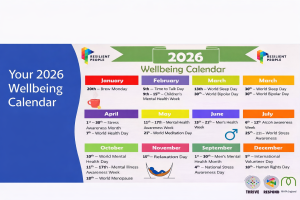
2026 Workplace Wellbeing Calendar: Using Awareness Days to Build Healthier, More Supportive Teams