NHS Staff Mental Health and Wellbeing | Resilient People
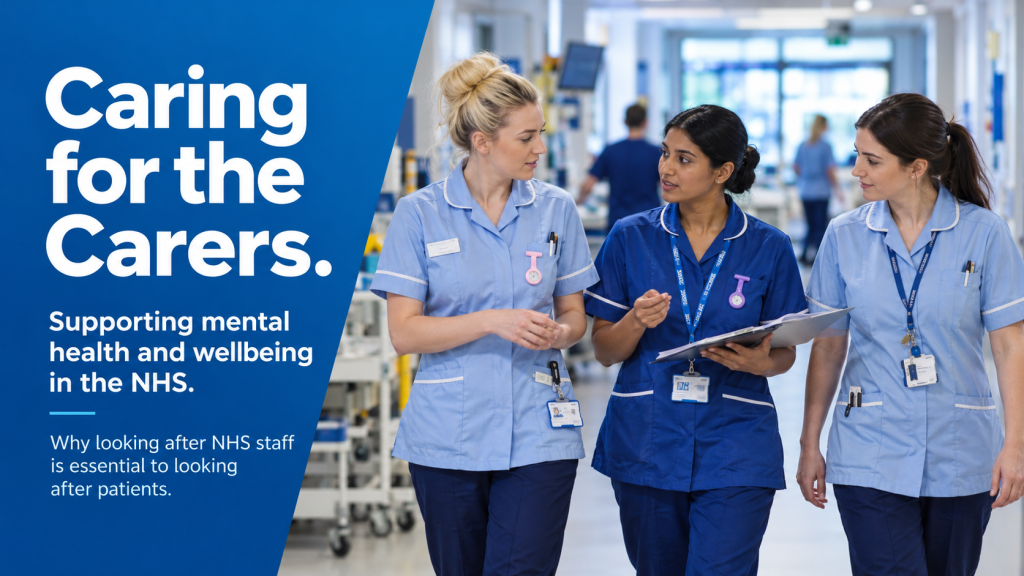
Caring for the Carers: Supporting Mental Health and Wellbeing in the NHS
Why looking after NHS staff is essential to looking after patients.
Caring for Others, But at What Cost?
A patient who needs reassurance. A family waiting for news. A difficult decision that cannot wait. A colleague who needs an extra pair of hands.
Across the NHS, moments like these are part of everyday working life.
They happen in hospitals, ambulances, community services and countless other settings where people work together to provide care, often under considerable pressure.
For many NHS employees, that work brings a strong sense of purpose and professional pride. Making a difference to someone's life, sometimes at their most vulnerable, can be enormously rewarding.
But caring for others can also take its toll.
The emotional demands of healthcare, combined with staffing pressures, demanding workloads and the responsibility of getting things right, can leave people struggling to find the time and energy to look after themselves.
And while resilience is an important quality in demanding roles, it shouldn't mean becoming unaffected by difficult experiences or learning to tolerate unlimited pressure.
Perhaps the question isn't simply how we help NHS staff become more resilient.
It's how we create working environments that support the wellbeing of people whose working lives are dedicated to caring for others.
What the Numbers Tell Us
The 2025 NHS Staff Survey provides a valuable insight into the experiences of employees across the health service in England.
42.36% of respondents reported feeling unwell because of work-related stress, while 31.47% said they felt burnt out because of their work.
More than half, 56.01%, reported attending work during the previous three months despite not feeling well enough to perform their duties.
And while many employees continue to report positive relationships with their immediate managers, only 54.80% felt their organisation took positive action on health and wellbeing, down from 57.05% in 2024.
These figures suggest that workplace mental health is much more than a question of individual coping skills.
They point towards the importance of working conditions, organisational culture and the support available to employees.
NHS England's sickness absence statistics reinforce the scale of the challenge. In February 2026, anxiety, stress, depression and other psychiatric illnesses accounted for 28.5% of recorded sickness absence among NHS hospital and community health services staff in England.
But numbers can only tell us so much.
To understand why healthcare work can be psychologically demanding, we also need to look beyond workload and consider the emotional experience of caring itself.
When Caring Becomes Emotionally Costly
There is a particular kind of pressure that comes from caring deeply about the quality of your work but feeling unable to deliver the care you believe someone needs.
Imagine a nurse caring for several patients, each requiring attention, reassurance and support. The nurse knows what good care looks like but has insufficient time to provide everything they would wish.
Or a clinician who believes a patient would benefit from timely treatment but faces delays beyond their immediate control.
These situations illustrate what researchers describe as moral distress.
Moral distress can arise when someone believes they know the right thing to do but feels prevented from doing it by circumstances, competing responsibilities or organisational constraints.
It is different from simply having a busy or stressful day.
It can involve frustration, sadness, guilt or a sense of powerlessness when professional values come into conflict with what is practically possible.
Research by the British Medical Association found that moral distress resonated strongly with the experiences of doctors participating in its 2021 survey. More recent research has continued to explore the relationship between moral distress, working conditions and healthcare professionals' wellbeing.
In some circumstances, particularly where experiences seriously conflict with deeply held moral beliefs, researchers also discuss moral injury. This is a distinct concept, and difficult experiences do not inevitably lead to lasting psychological harm.
The important point is that the emotional demands of healthcare are not always about what staff experience.
Sometimes they are about what staff feel unable to do.
Sometimes the hardest part of caring isn't what people are asked to do. It's knowing what they would like to do, but being unable to do it.
Recognising this matters because helping someone become better at managing stress will not necessarily resolve the circumstances creating that distress.
When the Shift Follows You Home
Leaving work doesn't always mean leaving work behind.
A difficult conversation with a patient's family. A clinical decision that continues to occupy your thoughts. The death of someone you have cared for. A particularly demanding shift when there was barely time to stop.
Experiences like these can stay with people long after they have finished working.
Reflection is an important part of professional practice, but repeatedly replaying difficult experiences or worrying about what might happen next can make it harder to recover.
And recovery matters.
People need opportunities to rest, reconnect with life outside work and restore the physical and psychological resources required for demanding roles.
Yet the NHS Staff Survey finding that more than half of respondents had worked while not feeling well enough to do so raises an important question.
When services are stretched and colleagues are under pressure, how easy is it for someone to take the time they need?
Professional commitment, loyalty to colleagues and concern for patients are valuable qualities. But they can also make it difficult to acknowledge personal limits.
Looking after yourself should not feel like letting somebody else down.
Looking After Staff Is Part of Looking After Patients
Supporting NHS staff wellbeing is sometimes treated as something separate from the central business of healthcare.
But research suggests the two are closely connected.
A major systematic review and meta-analysis published in JAMA Network Open in 2024 examined 85 studies involving more than 288,000 nurses across 32 countries.
The researchers found that higher levels of nurse burnout were associated with poorer patient safety culture, more reported medication errors, patient falls, infections and missed care, alongside lower patient satisfaction and poorer assessments of care quality.
These findings do not prove that burnout directly causes particular patient outcomes. Most of the studies were cross-sectional, and factors such as staffing, workload and organisational conditions may influence both employee wellbeing and patient care.
Nevertheless, the overall findings provide substantial evidence that the two are connected.
Providing safe, effective and compassionate care requires people to concentrate, communicate, make decisions, collaborate and respond appropriately under pressure.
Those demands can become harder to manage when people are exhausted, overwhelmed or struggling without adequate support.
Of course, NHS employees deserve healthy working conditions regardless of the impact on organisational performance.
But recognising the relationship between staff wellbeing and patient care reinforces why this matters to the NHS's central purpose.
Looking after NHS staff isn't separate from looking after patients. The two are closely connected.
The Importance of Being Heard
Imagine a healthcare assistant noticing a change in a patient's condition but feeling uncomfortable questioning a more senior colleague.
Or a junior clinician who is uncertain about a decision but worries that asking for clarification might make them appear inexperienced.
Perhaps a member of staff is concerned about workload, but previous attempts to raise the issue have been dismissed.
These situations highlight the importance of psychological safety.
Psychological safety describes an environment where people feel able to ask questions, raise concerns, acknowledge uncertainty and discuss mistakes without fear of inappropriate humiliation or punishment.
In healthcare, this matters for communication, teamwork and the willingness to speak up when something doesn't seem right.
Research has linked psychological safety with positive team behaviours, including information sharing and raising concerns. However, evidence establishing a direct relationship with objectively measured reductions in patient harm remains more limited.
Psychological safety matters for employee wellbeing too.
People need to feel able to say when they are struggling, when demands are becoming unmanageable or when they need support.
This doesn't mean avoiding accountability or difficult conversations.
It means creating an environment where concerns are taken seriously, mistakes can be discussed constructively and people are treated with respect.
Being heard is important. Knowing that someone will act on what they hear matters just as much.
Compassionate Leadership in Practice
Managers and team leaders play an important role in shaping how people experience work.
They may be the first to notice when someone is becoming withdrawn, struggling with concentration or finding their workload difficult to manage.
But compassionate leadership involves more than recognising when somebody is having a difficult time.
The King's Fund describes four connected elements of compassionate leadership: attending, understanding, empathising and helping.
In practice, that means noticing how people are doing, taking time to understand their experiences, recognising the impact and helping identify appropriate action.
Sometimes the answer might involve an adjustment, additional support or a referral to occupational health.
At other times, the problem may be organisational: repeated missed breaks, excessive demands, unclear responsibilities or communication that leaves employees feeling unsupported.
A compassionate manager doesn't simply listen sympathetically and move on. They consider what can be done, including raising issues they cannot resolve themselves.
Of course, NHS managers face considerable pressures too. They may be balancing staffing difficulties, patient needs and operational demands, often with limited influence over wider decisions.
Supporting managers therefore means giving them the skills, confidence, time and organisational backing to lead effectively.
This is also reflected in the 2026 NHS Staff Standards, which emphasise supportive line management, preventing work-related ill health and creating the conditions that enable managers to support their teams.
And compassionate leadership doesn't mean overlooking performance concerns or removing professional accountability.
It means approaching those responsibilities with fairness, humanity and an understanding of their impact on people.
Beyond Wellbeing Initiatives
Across the NHS, organisations have introduced a wide range of approaches to supporting staff wellbeing.
These include occupational health services, counselling, employee assistance programmes, peer support, mental-health awareness training and arrangements for supporting employees following potentially traumatic events.
These services can make an important difference.
But individual support cannot address every source of workplace distress.
A wellbeing workshop may help someone manage stress more effectively. It cannot, on its own, resolve repeated missed breaks, excessive workloads or a working environment where people feel unable to raise concerns.
A 2024 systematic review of 22 controlled studies of organisational mental-health interventions in healthcare settings found encouraging evidence for approaches that modified jobs and tasks, alongside some evidence supporting changes to scheduling and working environments.
The findings reinforce the importance of looking beyond individual interventions.
That means understanding the pressures affecting staff, involving employees in identifying improvements, supporting managers, addressing avoidable demands and creating conditions that allow people to recover.
It also means recognising that different NHS roles bring different pressures.
The experiences of an emergency department nurse, an ambulance clinician, a hospital porter, an administrator and an estates employee may differ considerably. Effective support needs to reflect those differences rather than assume one approach will work for everyone.
Ultimately, the question isn't whether wellbeing initiatives are worthwhile.
It's whether they form part of a wider approach that makes everyday working life healthier and more sustainable.
Supporting resilience means equipping people with useful skills while also creating working conditions that allow those skills to be effective.
Caring for the Carers
The NHS will always ask a great deal of the people who work within it.
Caring for people who are ill, frightened, vulnerable or in pain is demanding work. It requires skill, compassion, professionalism and resilience.
And not every difficult experience can be prevented.
But recognising the demands of healthcare shouldn't mean accepting poor psychological health as an inevitable consequence.
We can prepare people better, support managers, create psychologically safer teams and provide appropriate help following difficult experiences.
We can listen to staff, involve them in improving their working conditions and take practical steps to address avoidable pressures.
And we can recognise that resilience isn't simply something individuals bring to work. It is also supported—or undermined—by the environments in which they work.
If we want NHS staff to continue delivering compassionate, safe and effective care, we need to make sure compassion extends to them too.
A health service built around caring for people must also care for its own people.
Further Reading and References
- NHS Staff Survey (2025). National Results. Official workforce survey results for NHS organisations in England.
- NHS Employers (2026). NHS Staff Survey 2025: Health and Wellbeing Overview. Analysis of stress, burnout, presenteeism and organisational support.
- NHS England Digital (2026). NHS Sickness Absence Rates, February 2026. Workforce sickness absence statistics.
- British Medical Association. Moral Distress in the NHS and Other Organisations. UK research exploring doctors' experiences of moral distress and moral injury.
- Li et al. (2024). Nurse Burnout and Patient Safety, Satisfaction, and Quality of Care: A Systematic Review and Meta-Analysis. JAMA Network Open.
- LaPlante et al. (2025). Essential Elements and Outcomes of Psychological Safety in the Healthcare Practice Setting. Applied Nursing Research.
- Montgomery et al. (2025). Psychological Safety and Patient Safety: A Systematic and Narrative Review. PLOS ONE.
- The King's Fund. What Is Compassionate Leadership?. Practical explanation of compassionate leadership in health and care.
- Aust et al. (2024). The Effects of Different Types of Organisational Workplace Mental Health Interventions on Mental Health and Wellbeing in Healthcare Workers. International Archives of Occupational and Environmental Health.
- Department of Health and Social Care (2026). NHS Staff Standards: Detailed Requirements for Employers.
About Resilient People
At Resilient People, we help organisations build mentally healthy, psychologically safe workplaces through evidence-based training, consultancy and practical support.
We work with NHS organisations to equip managers to recognise and respond to mental-health concerns, develop staff awareness and wellbeing skills, and prepare teams to provide appropriate support following potentially traumatic workplace events.
Our programmes include Respond manager training, Mental Health First Aid, Trauma Prepared and Trauma Risk Management (TRiM).
Our aim is simple: helping organisations build Safer. Stronger. Prepared. workplaces.

19.10.2026
NHS Staff Mental Health and Wellbeing | Resilient People

29.09.2026
Looking After the People Who Keep Britain Moving

14.09.2026
Building Safer Sites Starts with Supporting People