Building Safer Sites Starts with Supporting People
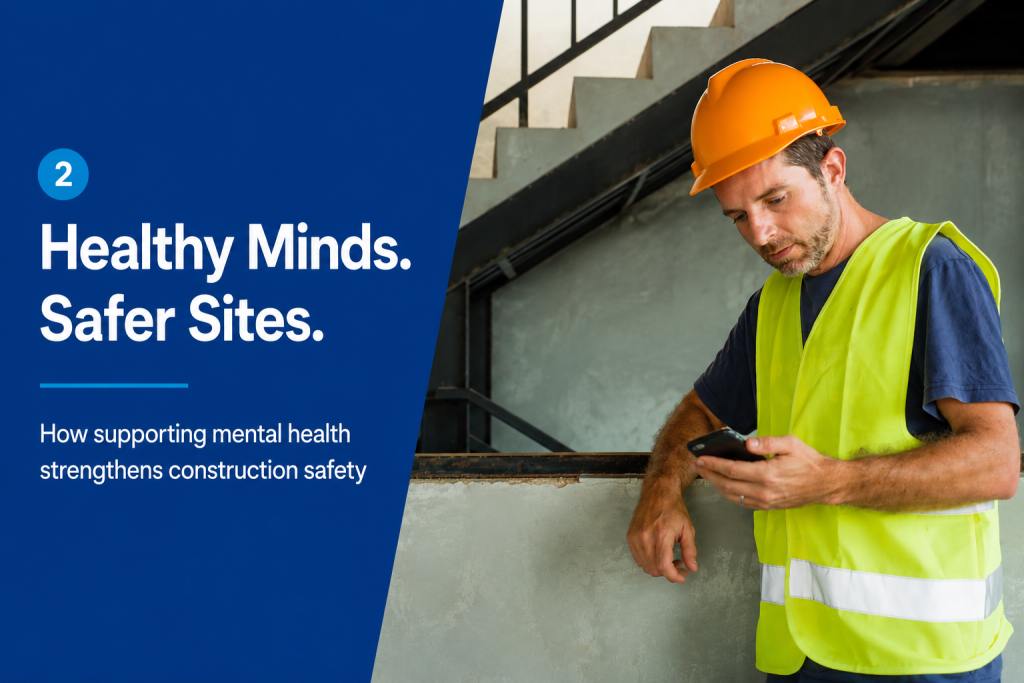
Why Mental Health Is Becoming a Core Part of Construction Safety
Over the past few decades, the construction industry has transformed its approach to physical safety.
Better planning, improved equipment, stronger leadership, safer working practices and a relentless focus on risk management have helped reduce workplace accidents and save countless lives. Today's sites are safer than they have ever been.
But protecting people doesn't stop with hard hats, harnesses and high-visibility clothing.
Increasingly, the industry is recognising that keeping people safe also means protecting their psychological health. Long hours, commercial pressures, tight deadlines, labour shortages and increasingly complex projects all place demands on people's wellbeing, and these can have a significant impact on both individuals and site safety.
This is reflected in the Chartered Institute of Building's (CIOB) Understanding Mental Health in the Built Environment report, which highlights the significant progress the industry has made in raising awareness while acknowledging that workload, commercial pressures and workplace culture continue to affect employee wellbeing. The report reinforces that creating mentally healthy workplaces is no longer viewed as separate from safety—it is becoming an essential part of it.
Construction Has Changed
Construction has always been a demanding industry, but the nature of that pressure has evolved.
Today's projects often involve complex supply chains, multiple contractors, challenging programmes, changing client expectations and increased regulatory requirements. Project teams are expected to deliver safely, efficiently and to exceptionally high standards, often while managing uncertainty and commercial pressure.
For many workers, there are additional challenges. Long working hours, commuting significant distances, working away from home, financial pressures and temporary contracts can all affect wellbeing.
The industry has always required resilience. What has changed is our understanding that resilience should not mean simply coping in silence.
Recognising and supporting psychological wellbeing is now becoming an essential part of good leadership.
"Mental health has become an increasingly important issue across the built environment, and organisations have a responsibility to create cultures where people feel able to seek support."
— Chartered Institute of Building
Looking Beyond the Hard Hat
Personal Protective Equipment (PPE) plays a vital role in keeping people physically safe.
However, even the best PPE cannot protect against fatigue, stress, anxiety or burnout.
These factors influence concentration, judgement, communication and decision-making—all of which are critical on busy construction sites.
The Health and Safety Executive's Working Minds campaign recognises this growing challenge, encouraging employers to Reach Out, Recognise, Respond and Reflect when addressing work-related stress. Rather than waiting until someone reaches crisis point, employers are encouraged to identify risks early, have regular conversations and create supportive working environments.
This should feel familiar to anyone working in construction. Good safety has never been about reacting after an accident—it has always been about prevention.
The same principle applies to mental health.
"The next generation of construction safety isn't just about preventing accidents—it's about protecting people."
This shift represents an important evolution in how the industry thinks about safety.
The Pressures Behind the Statistics
One of the reasons mental health has become such an important topic is that construction continues to experience one of the UK's highest suicide rates.
Research from the Lighthouse Charity estimates that around two construction workers lose their lives to suicide every working day—a sobering reminder of why continued action is so important.
However, these figures are not the whole story.
"Despite growing awareness and increased support, poor mental health remains a significant challenge across the built environment."
— Chartered Institute of Building
The research consistently points towards a combination of contributing factors:
- Long working hours
- Commercial and financial pressures
- Job insecurity
- Working away from family
- Fatigue
- A predominantly male workforce
- Reluctance to ask for help
- Constant pressure to deliver
Taken individually, these pressures may seem manageable. Together, particularly over long periods, they can significantly affect wellbeing.
Importantly, poor mental health is not only a personal issue. Fatigue, distraction and stress can all influence safety, communication and performance, reinforcing why wellbeing has become a genuine health and safety consideration.
Why People Don't Always Ask for Help
One of the biggest challenges identified across the research is that many people continue to struggle in silence.
Construction has traditionally valued resilience, independence and getting the job done. These qualities remain strengths of the industry, but they can sometimes make it difficult for individuals to acknowledge when they need support.
Many workers worry about appearing weak, letting colleagues down or being judged differently.
Others simply assume they should "get on with it."
This is where organisational culture becomes so important.
Psychological safety means creating environments where people feel able to speak openly about concerns, admit mistakes, ask questions and seek support without fear of embarrassment or negative consequences.
Just as workers are encouraged to report a damaged scaffold or faulty equipment, they should also feel confident raising concerns about wellbeing—either for themselves or a colleague.
What the Best Organisations Are Doing Differently
The good news is that the industry is making progress.
Encouragingly, the CIOB report highlights that awareness of mental health has improved significantly across the industry. More organisations are investing in manager training, mental health awareness, wellbeing champions and peer support than ever before, reflecting a growing understanding that good leadership includes supporting psychological wellbeing alongside physical safety.
Across the industry, many organisations are now:
- Training managers to have supportive wellbeing conversations.
- Providing Mental Health First Aiders and Wellbeing Champions.
- Including wellbeing within site inductions and toolbox talks.
- Encouraging peer support.
- Creating psychologically safe cultures where speaking up is encouraged.
- Recognising that good leadership includes looking after people's wellbeing as well as project delivery.
"Creating a culture where people feel able to speak openly about mental health benefits both individuals and organisations."
— Chartered Institute of Building
Perhaps most importantly, organisations are moving away from reacting only when someone reaches crisis and are instead focusing on early intervention and prevention.
This mirrors the same journey construction has already taken with physical safety—identifying risks early and taking action before harm occurs.
Mental Health Is a Safety Issue
One of the most important shifts happening across construction is the recognition that mental health is no longer viewed solely as a wellbeing issue—it is increasingly recognised as a safety issue.
Fatigue affects concentration.
Stress affects decision-making.
Distraction affects awareness.
Poor communication increases risk.
These are all factors that influence how safely people work.
When viewed through this lens, supporting mental health is not separate from health and safety—it is another way of preventing harm.
The organisations leading the way understand this. They are embedding wellbeing into leadership, supervision and everyday conversations because they recognise that safer people build safer sites.
Building Mentally Healthy Sites
Creating healthier workplaces does not require organisations to eliminate every source of pressure.
Construction will always involve deadlines, responsibility and challenging environments.
However, organisations can significantly reduce the impact of these pressures by embedding wellbeing into everyday leadership.
Simple actions make a difference:
- Make wellbeing part of regular safety conversations.
- Equip supervisors with the confidence to recognise concerns and start supportive conversations.
- Encourage people to speak up early rather than waiting until problems escalate.
- Recognise fatigue and stress as genuine safety risks.
- Celebrate supportive leadership alongside productivity and performance.
When wellbeing becomes part of everyday site culture rather than a separate initiative, it helps create stronger, healthier teams.
Building the Future of Construction
The construction industry has demonstrated what is possible when an entire sector commits to improving safety.
Today's challenge is not replacing that success—it is building on it.
Protecting people means recognising that physical safety and psychological health go hand in hand. One cannot truly exist without the other.
By investing in people's psychological health alongside their physical safety, organisations are not only protecting today's workforce—they are helping to build a stronger, safer and more sustainable industry for generations to come.
Ultimately, building safer sites starts with supporting the people who build them.
Further Reading and References
This article draws on research and guidance from the following organisations:
- Chartered Institute of Building (2025). Understanding Mental Health in the Built Environment.
- Mates in Mind. Construction and Mental Health Research and Resources.
- Lighthouse Charity. Construction Industry Suicide Statistics and Wellbeing Research.
- Health and Safety Executive. Working Minds Campaign.
- Mind. Building Mental Health in Construction.
About Resilient People
At Resilient People, we help organisations create mentally healthy, psychologically safe workplaces through evidence-based training, consultancy and practical support. We work with organisations across the construction, housing, rail, manufacturing, healthcare and public sectors, delivering programmes including Mental Health First Aid, Respond, Wellbeing Champions, Trauma Prepared and Trauma Risk Management (TRiM).
Our aim is simple: helping organisations build Safer. Stronger. Prepared. workplaces.
14.09.2026
Building Safer Sites Starts with Supporting People

03.07.2026
Looking After Those Who Look After Our Communities: Supporting the Mental Health of Housing Professionals

16.01.2026
Poster Resource: Brew Monday 2026